
Adrenal Gland Tumors
Assoc. Prof. Dr. Uygar Miçooğulları, FEBU · İzmir Urology and Andrology
Adrenal (Suprarenal Gland) Tumors
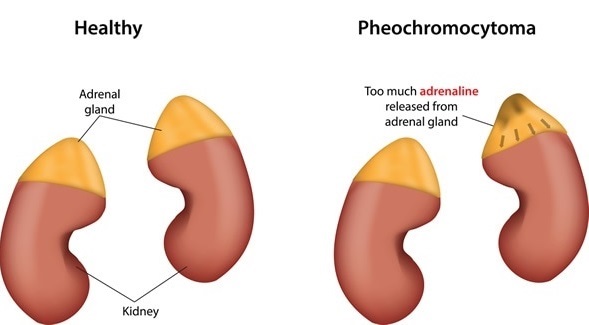
The adrenal glands (suprarenal glands) are two gland-like organs located just above the kidneys, responsible for releasing several vitally important hormones.
Masses detected incidentally in the adrenal gland (adrenal tumors) are common, and their frequency increases especially with aging. These masses are usually benign, do not require any surgical treatment and do not cause excess hormone production.
What Are the Symptoms?
If the mass is one that causes hormone release, depending on the hormone released it leads to problems such as high blood pressure, palpitations, sweating, weight gain, increased hair growth, increased fat on the face and abdomen, headache, irritability, acne and sexual dysfunction.
If the mass has grown very large, it may cause pressure symptoms (constipation, abdominal pain, etc.) and a palpable mass in the abdomen; if it has metastasized to distant organs, it may cause related complaints (cough, bone pain, jaundice, confusion, etc.).
How Is It Diagnosed?
The routine clinical approach is to distinguish between benign and malignant with radiological tests and to determine with hormone tests whether there is excess hormone secretion related to the mass. Adrenal tumors can be distinguished as benign or malignant with an accuracy of over 90% using computed tomography (CT) or magnetic resonance (MRI) tests.
When Is Surgery Recommended?
Surgery is recommended for suspicious masses, when findings related to excessive hormone production are detected, or when the mass is larger than 4 cm or grows by more than 10 mm during annual follow-up. If the tumor is functional, that is, if it produces hormones, drug treatment should first be given in coordination with an endocrinologist, and surgery should be planned once everything is under control.
Masses (adrenal tumors) that are generally smaller than 4 cm, appear benign and do not cause excess hormone release are followed up without recommending surgery. At follow-ups every 6 months or 1 year, checking the size of the mass and testing for suspected hormone excess is usually sufficient.
If a decision for surgery has been made, the operation can be performed with laparoscopic, robotic or open methods. In experienced hands, laparoscopic and robotic surgery is the gold standard and offers many advantages. Cosmetically, it spares the patient a large incision scar and provides a comfortable and fast recovery.
Contact us for an examination and appointment
Medical Park İzmir Hospital · Appointments: 0530 574 79 89 · 444 44 84
Book an Appointment