
Laparoscopic/Robotic (Minimally Invasive) and Open Kidney Cancer/Cyst Surgery
Assoc. Prof. Dr. Uygar Miçooğulları, FEBU · İzmir Urology and Andrology
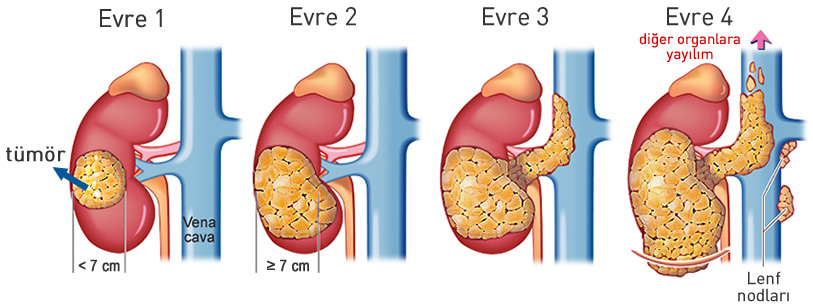
Kidney cancers account for approximately 3% of all adult cancer cases. They most often appear between the ages of 40 and 70 and are seen twice as often in men as in women. In our country, approximately 2,000 people are diagnosed with kidney cancer every year. As around the world, the incidence of kidney cancer is increasing in our country as well. Although the reason for this increase is not fully known, some risk factors associated with the development of kidney cancer have been identified. These are smoking, which doubles the risk of developing the disease, obesity, high blood pressure, exposure to toxic chemical agents and genetic causes.
Symptoms
The classic symptoms of kidney cancer are known as blood in the urine, flank pain and a palpable mass. However, these symptoms are seen in only a small proportion of patients, 10-15%. The disease often progresses insidiously, without symptoms, and only when it reaches the late stages and spreads to various organs does it cause complaints such as bone pain, cough, jaundice and weight loss. Most patients diagnosed at an early stage are detected incidentally during radiological imaging performed for another reason. Because early diagnosis provides survival rates above 85%, it is very important that people with a family history and those with risk factors do not neglect their routine urological check-ups.
Diagnostic Methods
The medical history and physical examination taken by the doctor regarding the patient's complaints and background is the first step toward diagnosis. During the examination, the doctor checks in particular for firmness or a palpable mass in the flank areas of the abdomen where the kidneys are located. The patient's complaints, history and the doctor's initial evaluation findings are very important in determining the investigations to be carried out next.
As laboratory tests, blood biochemistry and urinalysis are checked to find out whether there is bleeding in the urine and how well the kidneys are functioning. Kidney cancer is usually diagnosed with imaging methods. For this purpose, ultrasound (US), computed tomography (CT), MRI and/or PET/CT tests are used.
Treatment
The main method in the treatment of kidney tumors is surgery. Depending on the size and location of the tumor, either the entire affected kidney is removed (radical nephrectomy) or only the part containing the tumor is removed (partial nephrectomy). Today, in suitable cases, these operations can also be performed with laparoscopic or robotic surgery.
For suitable patients with small tumors, procedures we call ablative therapies (microwave thermal ablation, radiofrequency ablation, cryotherapy), in which the kidney is preserved and only the tumor is burned away, can be applied. In this way, the tumor can be destroyed without damaging the kidney.
If the disease has spread to other organs, in addition to surgery, the use of targeted therapies, which have come into use in recent years and produce quite good responses, and drugs that stimulate the immune system is recommended.
My advice to kidney cancer patients is to always remain optimistic, whatever the stage of their disease. This is because in masses detected at an early stage and confined to the kidney, surgical treatment already provides a cure in a large proportion of cases. In advanced disease, thanks to targeted therapies and immunotherapy applied in addition to surgery, important progress has been made in recent years in the treatment of this disease and effective responses have begun to be achieved.
Contact us for an examination and appointment
Medical Park İzmir Hospital · Appointments: 0530 574 79 89 · 444 44 84
Book an Appointment