
Medication Treatment for Benign Prostatic Hyperplasia (BPH)
Assoc. Prof. Dr. Uygar Miçooğulları, FEBU · Urology and Andrology in İzmir
How big is your prostate?
Using a comparison urologists also use during examinations: move the slider to see which treatments are usually considered as the prostate grows.
Prostate size alone does not determine treatment; the severity of symptoms, urine flow rate, urine left in the bladder and the examination are assessed together.
Walnut 20–25 g
Normal adult prostate size. If there are no symptoms, no treatment is needed; regular urological check-ups are recommended after age 50.
Measure your symptoms: IPSS testMandarin 30–50 g
Mild–moderate enlargement. If symptoms are mild, lifestyle advice and monitoring; if symptoms are significant, medication is usually the first step.
Medical prostate treatmentOrange 50–80 g
Moderate–advanced enlargement. If medication does not bring enough relief, or if there are problems such as inability to urinate, recurrent infection or bladder stones, surgery is considered: transurethral resection of the prostate (TURP) or laser.
Transurethral prostate surgery (TURP)Grapefruit 80–130+ g
Advanced enlargement. Because laser prostate surgery (HoLEP / ThuFLEP) can be performed regardless of prostate size, it stands out at these sizes; most patients do not need open surgery.
Laser prostate surgeryBenign Prostatic Hyperplasia (BPH)

What is the prostate?
The prostate is a gland located in the lower urinary tract, below the bladder (urinary bladder), surrounding the urethra (the urinary channel at the bladder outlet). It is found only in men. It secretes a fluid that is part of semen.
A healthy prostate is roughly the size of a large walnut, with a volume of 15–25 ml. As men age, the prostate slowly grows.
Benign prostatic hyperplasia
Prostate diseases usually appear at older ages. In men over fifty, they cause bothersome symptoms in the lower urinary tract. These symptoms are more often caused by enlargement of the prostate, a condition known as benign prostatic hyperplasia. Other conditions can also cause these complaints, and your doctor will take them into account.
Benign prostatic hyperplasia is a common condition. It is related to the hormonal changes that occur in men with aging. BPH can affect the way you normally urinate and can cause lower urinary tract symptoms that have a negative impact on your quality of life. It is the most frequently diagnosed condition in urology.
Prostate diseases can be very worrying, but it is important to know that BPH is not prostate cancer. Even when left untreated, BPH does not turn into prostate cancer. However, benign prostatic hyperplasia and prostate cancer can both develop with age and can occur together. You should consult your urologist to address your concerns.
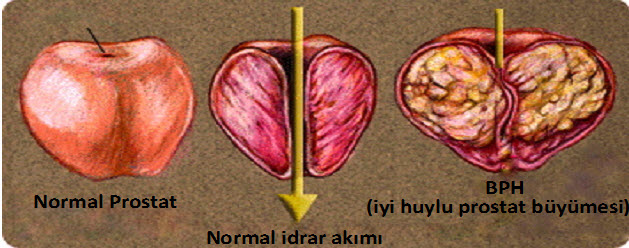
Symptoms of benign prostatic hyperplasia
Benign prostatic hyperplasia (BPH) can affect the way you normally urinate. This happens because the enlarged prostate presses on the urinary channel at the bladder outlet.
Symptoms can sometimes be mild. For example, you may feel the need to urinate more often, or it may become harder to empty your bladder completely. These mild symptoms may be a normal part of the aging process, like the decline in mobility, memory and flexibility. Your doctor may not recommend treatment for these mild symptoms.
Symptoms can sometimes be very bothersome and negatively affect your quality of life. In this case, you may benefit from treatment.
These symptoms, usually called lower urinary tract symptoms, are often caused by BPH and may also result from other conditions affecting the urinary system.

Medication Treatment for Benign Prostatic Hyperplasia
Medication is recommended for patients diagnosed with benign prostatic hyperplasia. This treatment is recommended when symptoms are bothersome and affect quality of life.
Several groups of medications are used to treat symptoms associated with BPH:
Herbal medicines
Alpha-blockers
5-alpha-reductase inhibitors (5ARI)
Muscarinic receptor antagonists (MRA)
Phosphodiesterase 5 inhibitors (PDE5)
Combinations of these medications
Each group of medications works in a different way and has different effects and side effects.
Herbal Medicines
Pumpkin seed, South African star grass, African plum and rye pollen are among the medicines in this group. How effective they are is also unclear. Because there are so many herbal medicines, no specific recommendation can be made about their use. You should not use herbal medicines without your doctor's advice.
Alpha-blockers
Alpha-blockers are a group of medications that relax the smooth muscles of the prostate, improving symptoms and urine flow. They are the group of medications most commonly recommended for men with BPH.
Alfuzosin, Doxazosin, Tamsulosin, Terazosin and Silodosin are among the medications in this group.
The medications usually show their full effect within a few weeks. Alpha-blockers do not reduce the size of the prostate or prevent it from growing. Some patients will eventually need surgery to relieve their symptoms.
The side effects of alpha-blockers are mild, and most patients do not experience any side effects despite long-term use. Patients who do experience side effects report weakness (asthenia), dizziness and mildly low blood pressure (hypotension).
Alpha-blockers can also cause retrograde ejaculation (semen being released into the bladder). This is an uncommon side effect and will disappear when treatment is stopped.

5-alpha-reductase inhibitors
5-alpha-reductase inhibitors (5ARI) are a group of medications that prevent the prostate from growing and may even cause it to shrink. These medications are more effective if the prostate is larger than 40 milliliters, and they are prescribed when prostate enlargement causes bothersome symptoms. These medications can reduce the risk of urinary retention and the need for surgery. Because they take a long time to improve symptoms, 5ARIs are recommended for treatments lasting longer than 1 year.
There are 2 types of 5ARI, and both give similar results: Dutasteride and Finasteride
The side effects of these medications mainly concern sexual function. These include reduced sexual desire, erectile dysfunction and ejaculation problems. Side effects are not very common and disappear when treatment is stopped. There is evidence that 5ARI use may increase the risk of prostate cancer. Because of their side effects, 5ARIs are usually recommended for patients with moderate or severe symptoms.

Muscarinic receptor antagonists
Muscarinic receptor antagonists (MRA) are a group of medications that reduce abnormal contractions of the bladder. In men, they can help with storage (urgency) symptoms caused by BPH. These medications are usually not prescribed if the bladder cannot empty completely and a lot of urine remains in the bladder after urination. There are several types of MRA:
Darifenacin, Fesoterodine, Oxybutynin, Propiverine, Solifenacin, Tolterodine and Trospium chloride are among the medications in this group.
The side effects of MRAs are generally mild. They include dry mouth and dry eyes, constipation, difficulty urinating, cold-like symptoms, blurred vision and dizziness.
Phosphodiesterase 5 inhibitors
Phosphodiesterase 5 inhibitors (PDE5I) are medications used to treat erectile dysfunction. These medications can also improve symptoms associated with BPH. There are 3 types of PDE5I: Sildenafil, Tadalafil, Vardenafil
In addition to men with erectile dysfunction, men with symptoms of prostate enlargement can also benefit from treatment with PDE5I.
PDE5Is can cause side effects such as headache, dizziness and indigestion. PDE5Is should not be used with certain medications, such as the alpha-blockers doxazosin or terazosin. Their use can also lead to serious problems, especially in men with heart problems.
They should not be used in men with uncontrolled blood pressure or kidney failure. If you experience vision loss after using PDE5I, consult your doctor.
Be sure to consult your doctor about any questions you have regarding the side effects of PDE5Is and the situations in which they should not be used.
Medication Combinations
Your doctor may recommend a combination of medications. The most commonly used combinations are:
An alpha-blocker with a 5ARI
An alpha-blocker with an MRA
The aim of these treatments is to combine the benefits of both medications. When used together, these medications can be more effective. However, they can often cause more side effects. The side effects of each medication were mentioned in the previous sections. Combination therapy is recommended for men with moderate or severe symptoms.
Contact us for an examination and appointment
Medical Park İzmir Hospital · Appointments: 0530 574 79 89 · 444 44 84
Book an Appointment