
Varicocele and Microsurgical Varicocelectomy
Assoc. Prof. Dr. Uygar Miçooğulları, FEBU · İzmir Urology and Andrology
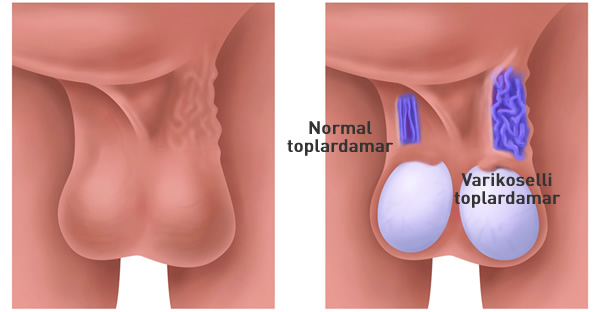
Varicocele is a condition in which the veins in the scrotum (also called the testicular sac), known as the “pampiniform plexus,” become enlarged and varicose. Varicocele is more common in men between the ages of 15 and 25 and ranks first among the diagnosable and treatable causes of male infertility. Microsurgical varicocele surgery, the gold standard in varicocele treatment, is a delicate procedure that should be performed by urology and andrology specialists with experience in microsurgery.
With microsurgical varicocele surgery, both the varicose veins and the veins at risk of becoming varicose are closed with the help of micro clips. This prevents the pooling of deoxygenated blood in the testicles and brings testicular temperature back down to the ideal level.
I will share with you all the important aspects of the varicocele treatment process. First, I would like to give some detail about varicocele, which is seen in 40% of men diagnosed with primary infertility and in about 75% of men diagnosed with secondary infertility, that is, men who later become unable to father a child.
As always, I will first go into detail on questions such as “What is a varicocele?”, “What are the symptoms of varicocele?” and “What harm does a varicocele cause?”, whose answers are critically important for couples who want to have children.
What Is a Varicocele?
As I just defined it, in its simplest form a varicocele is the varicose enlargement of the veins in the scrotum. Varicose veins in the testicles are very similar to varicose veins that form in the legs. What they have in common is that they are vascular diseases.
The causes of varicocele are not fully known. It is thought that the angle at which blood vessels in the body connect with one another, genetic predisposition, smoking and many problems not yet identified may come together to cause varicocele.
This condition, which can cause male infertility, is far more common than is thought. Varicocele is present in approximately 15% to 20% of adult men and, please note this, in approximately 40% of men diagnosed with infertility.
When the veins in the scrotum enlarge, very serious problems are not always encountered. However, because it is a progressive disease, varicocele, especially when it begins in adolescence, can result in male infertility.
So what exactly are the consequences of varicocele disease, and how does it become one of the causes of male-factor infertility? In other words, what harm does a varicocele cause?
When the veins in the testicle become varicose, the backward flow of deoxygenated blood, that is, reflux, causes the testicles to heat up, harmful agents in the deoxygenated blood accumulate in the testicles, and as a result of all these physiological problems testicular function is impaired and sperm quality and sperm count begin to decline.
Clinical studies show that varicocele reduces both the number and the quality of sperm and also disrupts testosterone production. For this reason, the question “Does varicocele prevent erections?” may come up. A drop in testosterone levels can both reduce sexual desire and trigger erection problems.
This decline in sperm quality is usually not a noticeable symptom; in fact, in some patients symptoms of varicocele do not appear at all. Still, especially in advanced cases, symptoms that reduce quality of life may be encountered in addition to infertility.
What Are the Symptoms of Varicocele?
The most common symptoms of varicocele can be listed as follows:
- Pain in the Testicles and Groin: Testicular pain that eases when lying on the back, may be mild or severe, worsens when standing or during physical exertion, especially in the summer months, and intensifies over time is among the symptoms of varicocele. Because pain is a problem that negatively affects quality of life, microsurgical varicocele surgery is recommended for patients who experience pain.
- Visible Veins in the Scrotum: As a varicocele progresses, the veins in the scrotum can enlarge markedly. This can even reach a level visible to the naked eye.
- Testicular Shrinkage: A varicocele can occur in one or both testicles. Shrinkage may occur in the testicle where the varicocele develops. Varicocele usually occurs on the left side. The main reason for this is the way the body's veins connect with one another. Because the left testicular vein joins the renal vein at a steeper angle than the right testicular vein, deoxygenated blood is more likely to pool in the left testicle.
- Infertility:Varicocele can lower sperm quality and, with the pooling of deoxygenated blood in the testicles and the rise in testicular temperature, can reduce testosterone production. Even if it causes no physical symptom, in men who are unable to have children varicocele may present as infertility.
How Is Varicocele Diagnosed?
Men who experience the symptoms I have just described, or who suspect male-factor infertility, should consult urology and andrology specialists.
For a varicocele diagnosis, the patient's medical history must first be taken and the testicles examined. A semen analysis (spermiogram) provides important data on sperm parameters.
Definitive results in diagnosing varicocele are obtained with scrotal color Doppler ultrasonography. During scrotal Doppler ultrasonography, the diameters of the veins, whether deoxygenated blood flows back into the testicles and whether there is any shrinkage of the testicle can be determined. In addition, the internal structure of the testicle can be evaluated while checking for problems in the testicles or surrounding tissues. Once a varicocele diagnosis is made, a testosterone test may also be requested.
Varicocele Treatment
Not every patient diagnosed with varicocele needs treatment. When deciding on microsurgical varicocele surgery, variables such as the patient's age, whether he has pain, whether he has sexual dysfunction such as premature ejaculation or erection problems due to low testosterone and other complaints, and whether he wishes to have children are evaluated, along with the couple's particular circumstances.
How Is Microsurgical Varicocele Surgery Performed?
The most commonly used method in the treatment of varicocele, accepted as the gold standard thanks to the advantages it offers, is the operation called microsurgical varicocele surgery or microsurgical varicocelectomy. During the operation, which is performed with a surgical microscope, the surgical area can be viewed in far greater detail than with the naked eye.
In microsurgical varicocelectomy, performed under spinal anesthesia by reaching the veins through an incision of approximately 3-4 cm in the groin area, even the finest veins can be seen, so both varicose veins and veins at risk of becoming varicose can be closed. Thanks to the microsurgical technique, the microarteries that supply the testicles with oxygenated blood can also be preserved.
The operation takes about 1 hour. Our patients can usually walk out of the hospital and be discharged 1 day after surgery.
When microsurgical varicocele surgery is compared with conventional varicocele surgery, it is possible to say that the microsurgical technique has clear advantages. Moreover, there are many scientific studies on this subject.
Varicocele Surgery: Microsurgical or Conventional?
From a scientific perspective, I can list the advantages of microsurgical varicocele surgery as follows:
A study conducted in 2015 showed that in patients who underwent varicocele surgery with the microsurgical method, complication rates were much lower than in those who underwent open varicocelectomy, the clinical treatment period after surgery was shorter, and significant improvement was observed in sperm quality.
Another study conducted in 2020 showed that after microsurgical varicocele surgery patients had a marked increase in total testosterone levels and, as a result of this increase, a marked improvement in sexual dysfunction and an increase in sexual desire.
In addition to all this, I would like to share the following information with you. Because even the finest veins can be seen during microsurgical operations, it becomes possible to identify those that may become varicose in the future. Since we also close these veins during the operation, the likelihood of recurrence falls below 0.1%. With the conventional method, unfortunately, this rate is around 40%.
What to Do After Surgery
- After microsurgical varicocele surgery, patients are discharged from the hospital after 1 day of observation. In the early period, patients need to protect their testicles, avoid sudden movements and avoid putting pressure on the surgical area.
- The antibiotics and painkillers prescribed to prevent infection after the operation and to control any pain should not be neglected.
- The time to return to work after surgery may vary depending on the job. Patients with jobs that do not require much movement can return to work within a few days, while for those working in demanding jobs that require standing for long periods this period may extend to 7 to 10 days.
- It is important that patients do not lift heavy objects and avoid strenuous exercise for at least 3 weeks.
- A follow-up examination is required one week after surgery.
Use of Supplements After Microsurgical Varicocelectomy
Varicocele surgery will of course bring a marked improvement in sperm parameters. In the postoperative period, patients should start taking the mineral and vitamin supplements recommended to improve sperm quality right away.
Healthy Lifestyle Habits Should Be Adopted After Microsurgical Varicocelectomy
The success of the operation is also closely related to whether patients adopt healthy lifestyle habits in the postoperative period. While taking vitamin and mineral supplements that improve sperm parameters, a healthy diet, quitting smoking and alcohol, adopting an active lifestyle and losing weight if overweight are recommended.
Final Words…
As medicine advances, we are able to find solutions to many health problems. Varicocele is among the most common organic causes of infertility. After surgery performed meticulously under a microscope, patients' sperm values are closely monitored. Semen analysis results at 3, 6, 9 and 12 months after the operation show a marked increase in sperm parameters. Still, varicocele surgery cannot guarantee 100% that a couple will conceive naturally. The aim of varicocele surgery is to enable a man's testicles to produce sperm of the highest possible number and quality. It is not right to reduce the achievement of pregnancy solely to sperm parameters. For this reason, when deciding on surgery, the age and general health of both the patient and his partner and the couple's expectations should be taken into account.
Contact us for an examination and appointment
Medical Park İzmir Hospital · Appointments: 0530 574 79 89 · 444 44 84
Book an Appointment