Many men with erection problems look for methods that could provide lasting improvement without medication or surgery. At this point, one of the most frequently asked questions is: does ESWT for erectile dysfunction work? The answer is not the same for everyone. Low-intensity shock wave therapy can help improve erection quality in the right patient group; however, it should not be seen as a procedure that can resolve every case of erectile dysfunction or that comes with a guaranteed result.
What is ESWT for erectile dysfunction?
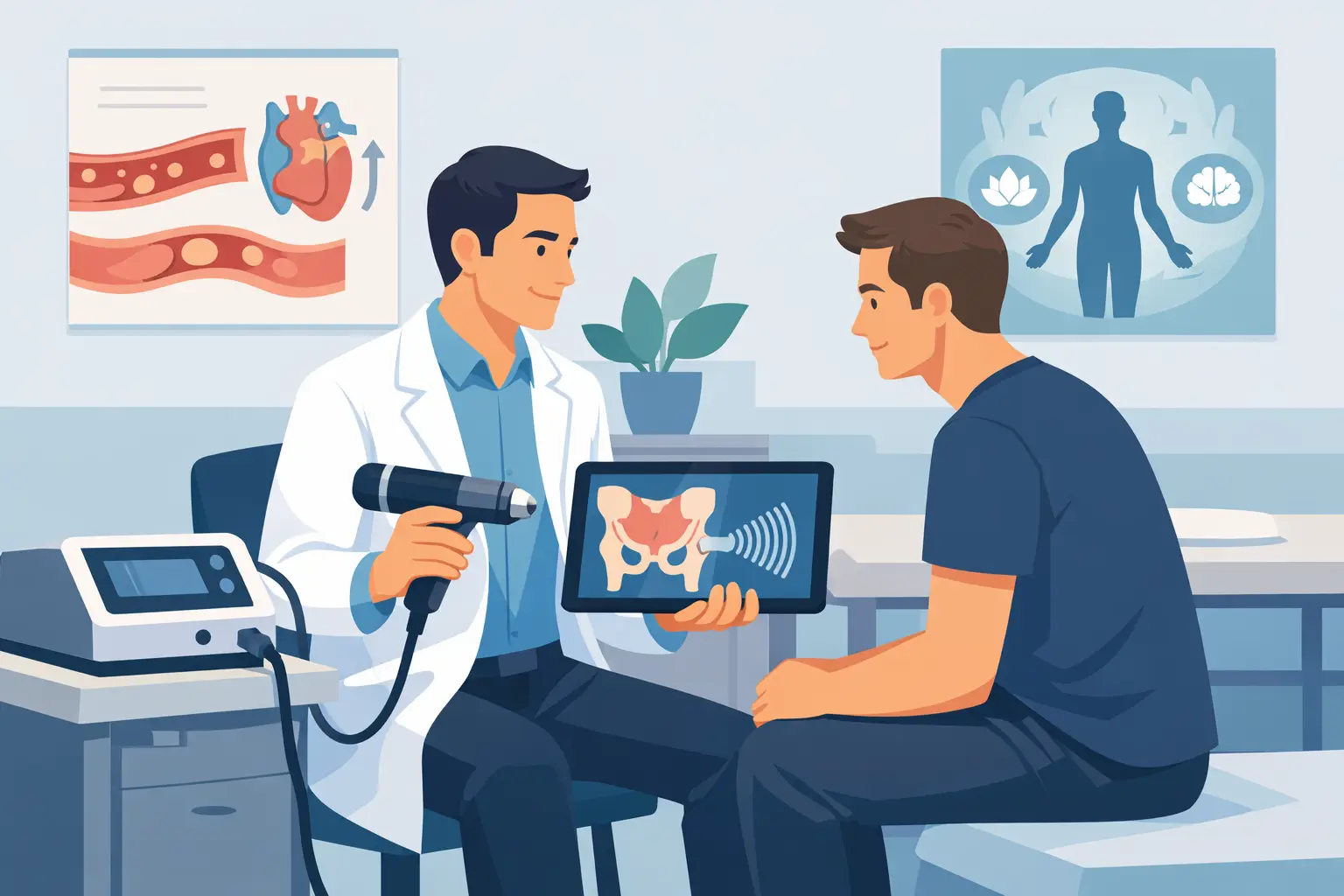
ESWT is shock wave therapy applied from outside the body. The form used for erectile dysfunction is generally described as low-intensity shock wave therapy. During the procedure, low-energy acoustic waves are applied to specific areas of the penile tissue. The aim is to support blood flow in the tissue, stimulate the formation of new small blood vessels and improve the function of the existing vascular structure.
An erection is not only a matter of sexual arousal. Sufficient blood reaching the penis, the vessels' ability to retain that blood, healthy nerve conduction, hormone levels and psychological factors all play a role together. ESWT is considered particularly in cases of vascular erectile dysfunction, that is, when blood flow to the penis is insufficient.
The procedure is mostly performed in an outpatient setting. It does not require anesthesia, and the patient can return to daily life afterward. The number of sessions may vary according to the technical specifications of the device used and the person's clinical condition. For this reason, applying the same session plan to everyone is not the right approach.
Does ESWT for erectile dysfunction work?
Scientific studies show that low-intensity shock wave therapy may provide benefit in some men with mild to moderate vascular erectile dysfunction. Positive results may be seen especially in patients who respond only partially to oral erection medications known as phosphodiesterase type 5 inhibitors, or who want to enhance the effect of these drugs.
However, the success of the treatment depends on age, the presence of diabetes, the extent of vascular disease, smoking, testosterone level, the medications used and how long the erection problem has been present. The expectations of a patient with mild vascular insufficiency should not be the same as those of a patient with advanced diabetes, severe vascular disease or nerve damage.
In some patients, ESWT may help erections start more easily, last better or improve the response to medication. However, its effect may be more limited in severe erectile dysfunction, in marked nerve damage after radical prostate surgery, or when there is advanced structural damage in the penis. For this reason, the treatment should be considered not as a stand-alone solution but as part of an individually planned andrological treatment.
Which patients may benefit more?
The most suitable candidates for ESWT are generally men with mild or moderate erectile dysfunction, particularly of vascular origin. Erection problems are common in people with factors that harm vascular health, such as high blood pressure, high cholesterol, early-stage diabetes, excess weight and smoking. In these patients, ESWT can be considered together with lifestyle changes and any necessary medical treatment.
Patients who get partial benefit from oral erection medications may also be suitable candidates. The goal here is to achieve better erections without medication in some patients, and an adequate response with a lower dose of medication in others. The patient's expectations should be discussed openly before treatment. The aim is to create a realistic and measurable improvement plan.
On the other hand, ESWT alone may not be sufficient when severe psychological performance anxiety, relationship problems or depression are at the forefront. Similarly, in patients with testosterone deficiency, turning solely to shock wave therapy without a hormonal evaluation is not right. Any procedure performed before the underlying cause of the problem is identified can lead to a loss of time and money.
Why is a detailed evaluation needed before treatment?
Erectile dysfunction is sometimes not just a problem affecting sexual life; it can be an early warning sign for vascular health. Because the penile arteries are thinner than the coronary arteries, the first signs of arteriosclerosis may appear as an erection problem in some men. For this reason, the urological evaluation should be supported by a cardiology or endocrinology assessment when necessary.
During the examination, the onset of the erection problem, the presence of nighttime erections, reduced sexual desire, medications used, previous surgeries and accompanying diseases are asked about. Blood sugar, cholesterol, testosterone and other hormone tests deemed necessary may be planned. Penile Doppler ultrasonography can be a useful guide in selected patients for assessing blood flow in the penile vessels.
These tests help determine whether ESWT is truly a suitable option. They also make it possible to establish the right order among options such as medication, a vacuum device, penile injection therapies, psychosexual support or, in advanced cases, a penile prosthesis.
What are the advantages and limits of ESWT?
The most important advantage of ESWT is that it is a non-surgical procedure that does not disrupt daily life. There is usually no significant pain during the procedure. Some patients may experience mild tenderness, temporary redness or brief discomfort. With proper technique and an experienced evaluation, the risk of serious side effects is low.
On the other hand, the effect of the treatment does not appear to the same degree in everyone. While some patients see clear benefit, the change may be limited in others. How long the effect lasts may also differ from person to person. When smoking, uncontrolled diabetes, inactivity and excess weight, which harm vascular health, continue, maintaining the gains achieved can become difficult.
For this reason, presenting shock wave therapy as a miracle procedure is not medically correct. A successful outcome requires the right indication, appropriate device technology, regular follow-up and management of accompanying risk factors. In particular, choosing standard packages found on the internet without a personal medical evaluation can mislead the patient.
Which approaches can be planned together with ESWT?
Erectile dysfunction is often managed not with a single method but with a balanced combination of several approaches. To support vascular health, quitting smoking, regular exercise, weight control and a Mediterranean-style diet may be recommended. Controlling diabetes, blood pressure and cholesterol also has a direct effect on sexual function.
Depending on the patient's condition, oral medications, appropriate hormone therapy if there is testosterone deficiency, or penile injection treatments may be considered. In patients with penile curvature, Peyronie's disease, post-traumatic deformity or severe loss of erectile function, reconstructive surgery and penile prosthesis options are evaluated separately.
In the andrology approach of Assoc. Prof. Dr. Uygar Miçooğulları, the aim is not merely to suppress the symptom temporarily, but to identify the cause of erectile dysfunction and plan the treatment steps suited to the patient. Protecting privacy, providing detailed information and follow-up after treatment are core parts of this process.
Questions to ask before having ESWT
Before deciding, you should clarify whether the procedure is performed with a device suitable for low-intensity shock wave therapy, the likely cause of your erectile dysfunction, the rationale for the proposed session plan and the realistic benefit expected from treatment. In addition, medications used, blood-thinning therapy, active infections and accompanying diseases must be reported to the physician.
Erectile dysfunction can be a difficult subject to talk about; however, it is a health problem that can be managed with the right evaluation. Whether or not ESWT is suitable for you, the healthiest starting point is to have the source of the problem evaluated by a specialist without delay.