
A curvature of the penis that develops later in life, pain during erection or difficulty during intercourse are complaints that many men put off talking about. Yet Peyronie's disease treatment options can bring meaningful improvement in quality of life when they are planned according to the degree of curvature, the structure of the plaque, the stage of the disease and erectile function. The right approach is not just measuring the curvature; it is evaluating sexual function, the patient's expectations and the course of the disease over time together.
Peyronie's disease occurs when a hardened area called a plaque forms in the tissue responsible for erection of the penis. This plaque can cause the penis to bend in one direction during erection, to shorten, to change shape or, in some patients, to be painful. Not every curvature means the same thing, and not every patient needs surgery right away.
Correct staging forms the basis of treatment
In the initial evaluation of Peyronie's disease, it must be established whether the disease is in the active or the stable phase. In the active phase, the curvature may progress, new shape changes may appear and pain during erection may be more pronounced. In the stable phase, pain usually subsides, the curvature remains at a certain level and shows no significant change over recent months.
During the examination, the location and hardness of the plaque are assessed. In patients who need it, penile Doppler ultrasonography can provide detailed information about the penile vascular structure, the characteristics of the plaque and erection quality. Photographs taken by the patient at home during a full erection, under suitable conditions of privacy, can also help assess the degree and direction of the curvature.
This stage directly affects the treatment decision. In a patient with mild curvature whose pain is decreasing and who is able to have intercourse, close follow-up may be sufficient. On the other hand, a curvature that creates a mechanical obstacle to intercourse, a marked deformity, a sense of penile shortening or an accompanying erection problem may require a more active treatment plan.
What are the treatment options for Peyronie's disease?
Treatment does not consist of a single method. While follow-up and supportive measures are sufficient in some patients, injection therapies or surgical methods come into consideration in others. The decision should be made with the goal of safely achieving a functional and satisfying sex life, rather than a promise of eliminating the curvature completely.
Follow-up and an approach that supports quality of life
If pain is predominant in the active phase, medications for pain control may be used on the physician's advice. Managing conditions such as diabetes, high blood pressure, smoking, high cholesterol and erectile dysfunction is also important, because the vascular health of the penis can affect both erection quality and treatment results.
For mild curvatures, regular follow-up is a valuable option for understanding whether the disease is progressing. During this process, clear information is needed to reduce the patient's anxiety. Peyronie's disease is not cancer and is not contagious; however, its effect on sexual life and self-confidence should not be underestimated.
Oral treatments and setting the right expectations
Various oral medications and supplements may be considered for Peyronie's disease. However, scientific evidence showing that these methods correct an established plaque or a marked curvature in every patient is limited. For this reason, it is not realistic to think that advanced curvature will disappear with supplements alone.
Oral treatments can be considered as supportive in some selected patients, especially in the early phase or in particular accompanying situations. The key point here is not to turn to self-treatment with products recommended on the internet. The interaction of the medications used with other diseases and regular medications must also be taken into account.
Penile traction and vacuum devices
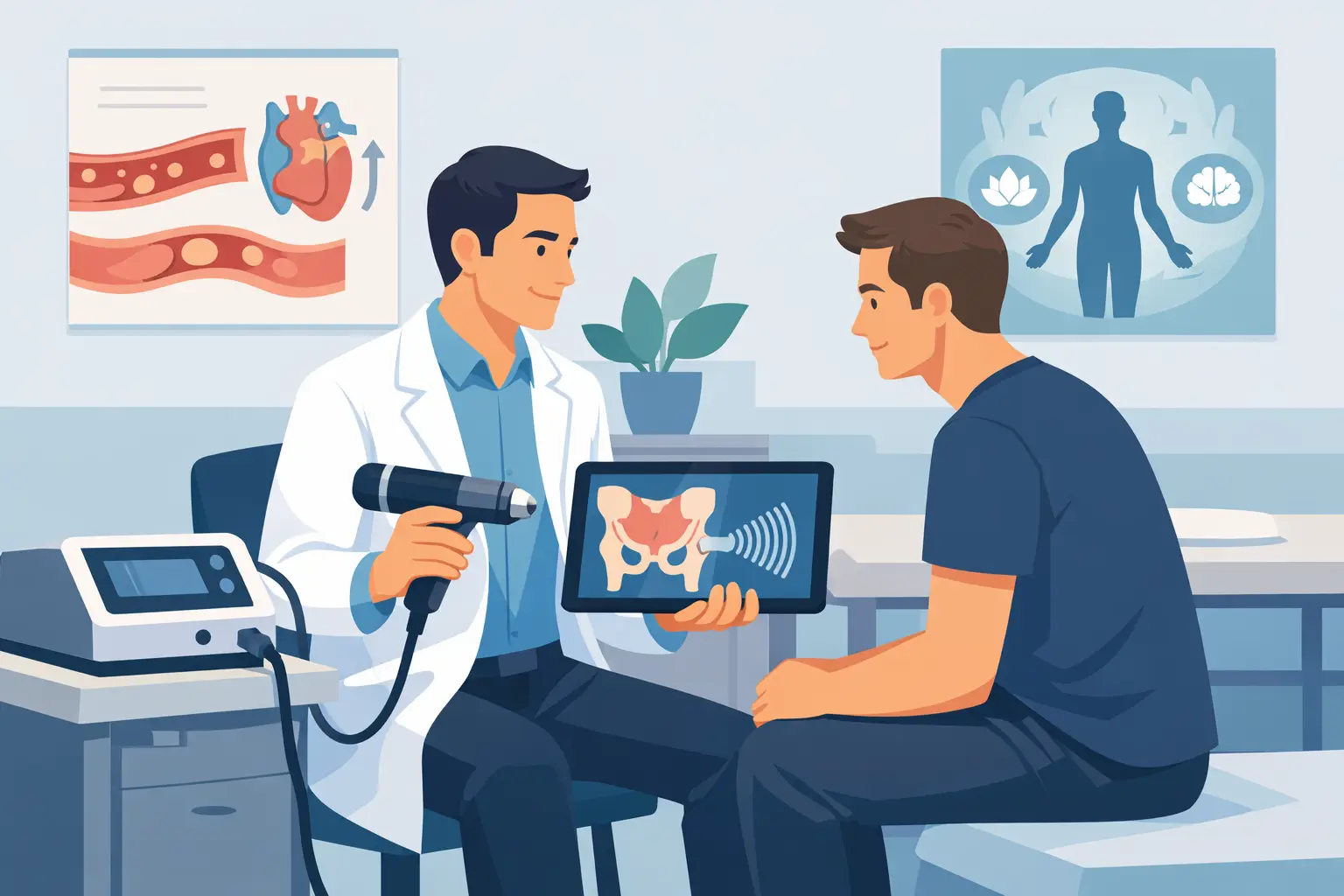
By applying a controlled stretching force, penile traction devices may provide support in some patients with regard to curvature and loss of penile length. They can be used on a physician's recommendation, especially in the early phase, alongside injection therapies or after surgery. However, the result depends on using the device correctly and applying it regularly for the recommended period.
These treatments require patience. In patients who cannot fit them into their daily routine, use the device irregularly or apply the wrong technique, the expected benefit may not be achieved. Vacuum erection devices can also be considered in selected patients for erectile rehabilitation and to preserve tissue elasticity.
Injection therapies into the plaque
In patients whose curvature has certain characteristics, injections into the plaque can be a non-surgical option. The drug to be used varies according to the stage of the disease, the structure of the plaque, the direction of the curvature and the experience of the center. In some protocols, drugs targeting the plaque tissue may be preferred, while in others agents expected to act through different mechanisms may be chosen.
Injection therapy does not guarantee complete correction of every curvature. The aim, in a suitable patient, is to reduce the curvature, ease difficulty during intercourse and possibly reduce the need for surgery. Because of risks such as bruising, tenderness, swelling and, rarely, more serious tissue problems, the treatment needs to be planned by an experienced urology and andrology team. Adherence to the modeling or traction program recommended after injection also contributes to the result.
When is surgical treatment considered?
Surgery is one of the most effective correction options in Peyronie's disease; however, the right timing is decisive. It is generally considered when the curvature has become stable, the pain has decreased markedly and there is a mechanical obstacle to sexual intercourse. In the surgical decision, penile length, the type of deformity and erectile capacity are taken into account as much as the degree of curvature.
Plication operations
In plication methods, the penis is straightened by placing special sutures in the tissue on the side opposite the curvature. It is mostly preferred in patients with adequate penile length, a simple curvature and good erectile function. An important advantage of the operation is that it provides effective correction with a relatively more limited procedure.
On the other hand, a feeling of some loss of penile length may occur. This risk should be discussed openly before surgery. A balanced decision needs to be made between the patient's expectation of completely correcting the curvature and the expectation of preserving penile length.
Plaque incision or excision and grafting
In severe curvature, an hourglass appearance, a marked indentation deformity or more complex shape abnormalities, procedures to incise or remove the plaque followed by the use of a graft may be considered. This approach can offer an advantage in terms of preserving penile length; however, it is technically more extensive.
After grafting, the risk of reduced erection quality may be higher compared with plication methods. For this reason, an objective assessment of erectile function before surgery is very important. Not every severe curvature requires a graft; the right method is determined according to examination and imaging findings.
Correction with a penile prosthesis
If Peyronie's disease is accompanied by severe erectile dysfunction and there is no adequate response to medication or other erection treatments, the penile prosthesis option may be considered. While the prosthesis aims to resolve the erection problem, additional correction procedures for the curvature can be performed in the same session.
This method can be an effective solution especially for patients who cannot have sexual intercourse because of both curvature and an erection problem. However, because it is an irreversible surgery, carries surgical risks such as infection and requires the patient's expectations to be addressed in detail, the decision process requires care.
Why is erectile function decisive in the treatment decision?
In Peyronie's disease, curvature and erectile dysfunction frequently occur together, but not to the same degree in every patient. In a patient with good erectile function, surgery focused on correcting the curvature can be planned. In a patient with insufficient erectile capacity, however, correcting only the curvature may not resolve the patient's main complaint.
For this reason, during the evaluation, the difficulty the patient experiences during intercourse, morning erections, response to medications used and accompanying diseases are asked about in detail. The aim is not only an anatomical correction but an improvement that truly makes a difference in the patient's sex life.
Individualized planning and postoperative follow-up
Success in Peyronie's treatment is not limited to choosing the right technique. Detailed information before surgery, close monitoring of the recovery process and, when necessary, arranging a rehabilitation plan are also part of treatment. When to resume sexual intercourse, which symptoms warrant contacting the physician and how devices or medications should be used must be explained clearly to the patient.
In the andrology and penile reconstructive surgery approach of Assoc. Prof. Dr. Uygar Miçooğulları, the anatomical features of the disease and the patient's sexual expectations are evaluated together. This approach helps avoid unnecessary procedures while choosing the appropriate technique in patients who need surgery.
If you are experiencing curvature, pain or an erection problem in the penis, planning a urology and andrology evaluation rather than waiting for the complaint to progress is the right step. A detailed examination that respects your privacy clarifies the most suitable and realistic treatment path for you.