
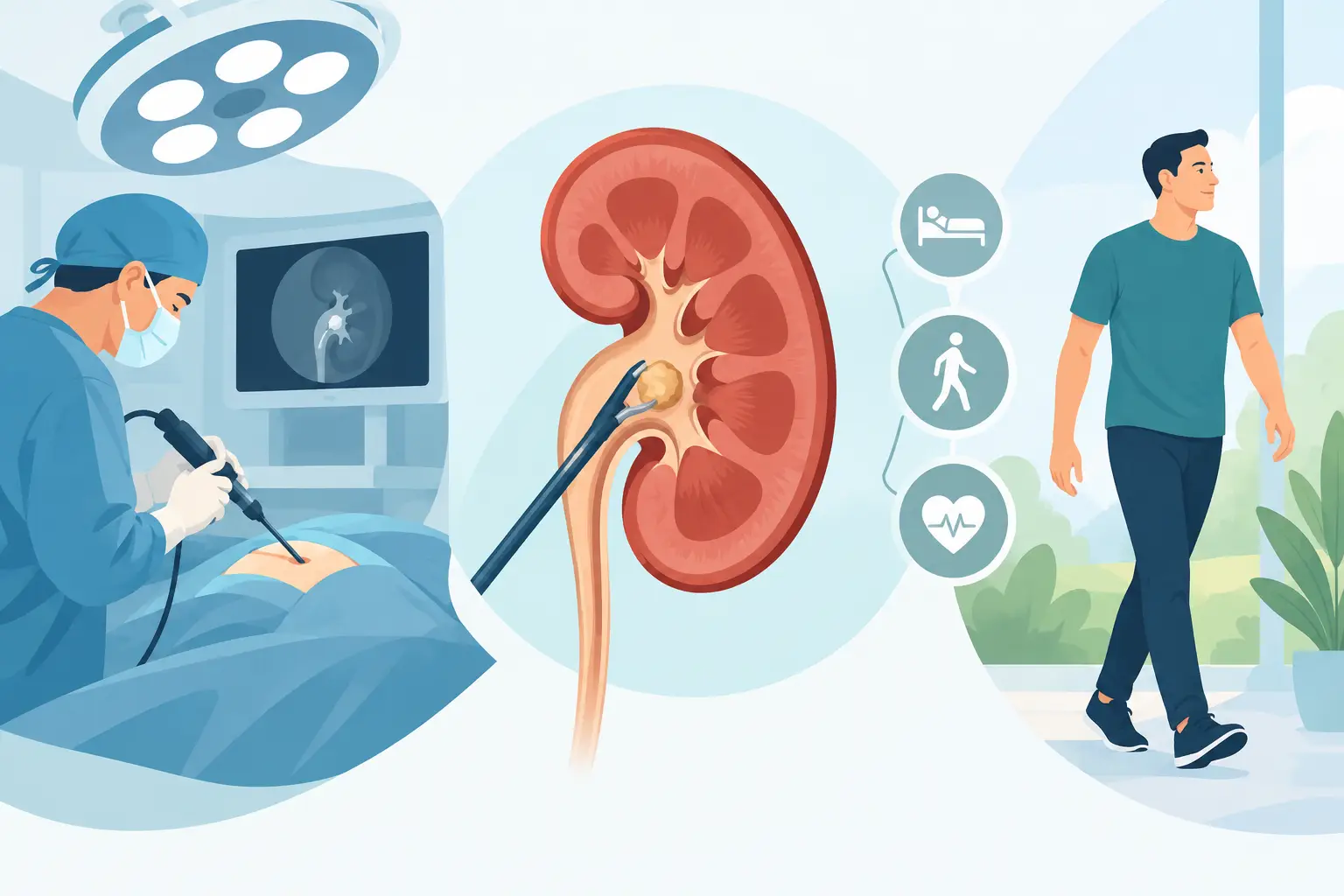
As a kidney stone grows larger, as the stone burden increases, or when the stone forms a complex structure filling the kidney's urine-collecting system, passing it with medication or fragmenting it alone may not be enough. At this point, one of the questions patients ask most often is how PCNL surgery is performed. PCNL is a minimally invasive stone operation in which the kidney is reached through a small access tract made through the skin, allowing the stones to be broken up and removed.
Known medically as percutaneous nephrolithotomy, this procedure is performed through a smaller skin incision than open kidney stone surgery. However, it is not automatically the first choice for every kidney stone. A personalized treatment plan is created by evaluating together the location, size and hardness of the stone, the anatomy of the kidney, the presence of infection, the patient's general health and any previous operations.
In which patients is PCNL considered?
PCNL is mostly considered for stones larger than 2 centimeters within the kidney, for extensive stones known as staghorn stones that fill the renal pelvis and calyces, or for stones that could not be adequately treated with other methods. In particular, a stone obstructing urine flow in the kidney, causing recurrent infections, causing pain or threatening kidney function may strengthen the decision for active treatment.
In some patients, flexible endoscopic stone surgery, known as RIRS, or stone fragmentation from outside the body may be more suitable. These options may be preferred for smaller stones, when the stone's position inside the kidney is favorable and when the patient's clinical condition allows. In contrast, with a large stone burden, PCNL can offer an advantage because of its potential to clear the stone in a single session or with fewer procedures.
The treatment decision does not take into account only the millimetric size of the stone seen on CT. The hardness of the stone, its position inside the kidney, the risk of infection, the use of blood thinners and the working capacity of the kidney also change the surgical approach. For this reason, proper planning requires considering the imaging and the patient's full medical history together.
How is PCNL surgery performed? The main stages of the procedure
PCNL surgery is usually performed under general anesthesia; the patient feels no pain during the procedure. Before surgery, a urinalysis and urine culture, blood tests, an assessment of kidney function and, in most patients, a computed tomography scan showing a detailed map of the stone are planned. If the urine culture shows an infection, the aim is first to bring the infection under control with appropriate antibiotic treatment so that surgery can be performed safely.
During the procedure, a thin catheter may be placed through the urethra, via the bladder and ureter. This catheter helps visualize the kidney's urine-collecting system and plan safe access. The surgeon then reaches the kidney from the lower back with a fine needle under ultrasound and/or X-ray guidance.
This is one of the most critical steps of the operation. The aim is to reach the area where the stone is located from the safest and most effective angle. The tract created with the needle is dilated in a controlled manner, and a thin camera system called a nephroscope is advanced into the kidney through this channel. Although the skin incision is usually small, the access tract may vary according to the diameter of the instrument used and the characteristics of the stone.
Once the stone is visualized, it is broken into fragments with ultrasonic, pneumatic or laser energy systems. Fragments reduced to a suitable size are removed with special instruments. At the end of the procedure, imaging is used to check whether any significant fragments remain in the kidney. In some patients, a temporary drainage tube from the kidney to the outside, known as a nephrostomy catheter, may be placed; in some suitable cases, tubeless PCNL may be possible.
A temporary double-J stent may also need to be placed in the ureter. This stent is used to support urine flow from the kidney to the bladder and is removed after the planned period. A nephrostomy or stent is not a standard requirement; the decision is made by taking into account the condition of the stone, findings during the procedure, bleeding control and urine flow.
How long does the operation take?
The duration of the operation varies according to the size and number of stones, the areas where they are located, the kidney's anatomy and any previous procedures. A single, accessible stone and a hard stone burden spread across many parts of the kidney are not treated in the same amount of time. For this reason, rather than promising an exact duration before surgery, it is more appropriate to share a realistic plan based on the imaging findings.
With some complex stones, a second session may be needed for safety reasons. This does not mean the procedure has failed. Particularly with large staghorn stones, the aim is to reduce the stone burden as effectively as possible, or clear it completely, without exposing the kidney to unnecessary risk.
Why is preoperative preparation important?
A patient scheduled for PCNL needs to report all the medications they use. Aspirin, blood thinners, some rheumatism medications and herbal supplements can affect the risk of bleeding. These medications should not be stopped or changed without a physician's advice. Any necessary adjustment is made in coordination with the specialist who prescribed the medication.
Uncontrolled blood pressure, diabetes, heart and lung problems and an active urinary tract infection also affect the anesthesia and surgical plan. If there are complaints such as fever, chills and shivering, burning, foul-smelling urine or significant pain, they must be reported before the operation. In stone surgery, proper management of infection is decisive not only for comfort but also for patient safety.
Sending the removed stone to the laboratory for analysis is valuable for an approach aimed at preventing future stone formation. Calcium oxalate, uric acid, cystine or infection-related stones are not followed up in the same way. When necessary, a metabolic evaluation is used to personalize dietary, fluid intake and medication recommendations aimed at reducing stone recurrence.
Hospital stay and recovery after PCNL
The length of hospital stay varies according to the extent of the procedure, the level of pain, blood values, whether there is fever, and the need for a drain or stent. Many patients can be discharged after a short period of hospital monitoring. In the first days, tenderness in the lower back, slightly blood-tinged urine and fatigue may occur. How these progress depends on the extent of the surgery and the individual's rate of recovery.
After discharge, adequate fluid intake, regular use of prescribed medications and attending follow-up appointments are important. The time to return to desk work and the time to return to heavy physical activity are not the same. In particular, for heavy lifting, intense exercise and long journeys, the period recommended by your physician should be observed.
In situations such as fever, chills, increasing pain, heavy or clotted bleeding, inability to pass urine, shortness of breath or marked weakness, the healthcare team should be contacted without delay. Accessible postoperative follow-up allows such symptoms to be evaluated in a timely manner.
What are the possible risks of PCNL surgery?
As with every surgical procedure, PCNL has risks. Bleeding, infection, fever, injury to surrounding tissues, urine leakage and the need for a temporary stent or additional drain are among these risks. In rare cases, a blood transfusion, an additional procedure or intensive care monitoring may be needed. It is also possible that the stone cannot be fully cleared in a single session and that additional treatment is planned for the remaining fragments.
The existence of these risks does not mean PCNL should not be performed; the main goal is to weigh the expected benefit against the individual's specific risks in a balanced way. An experienced surgical team, appropriate imaging, infection control and close postoperative follow-up are the key elements supporting the safety of this process.
In kidney stone treatment, the right method is not the one with the smallest incision; it is the one that clears the stone effectively and protects the kidney. A detailed urological evaluation that considers your complaints, imaging results and general health will clarify the surgical approach that suits you.