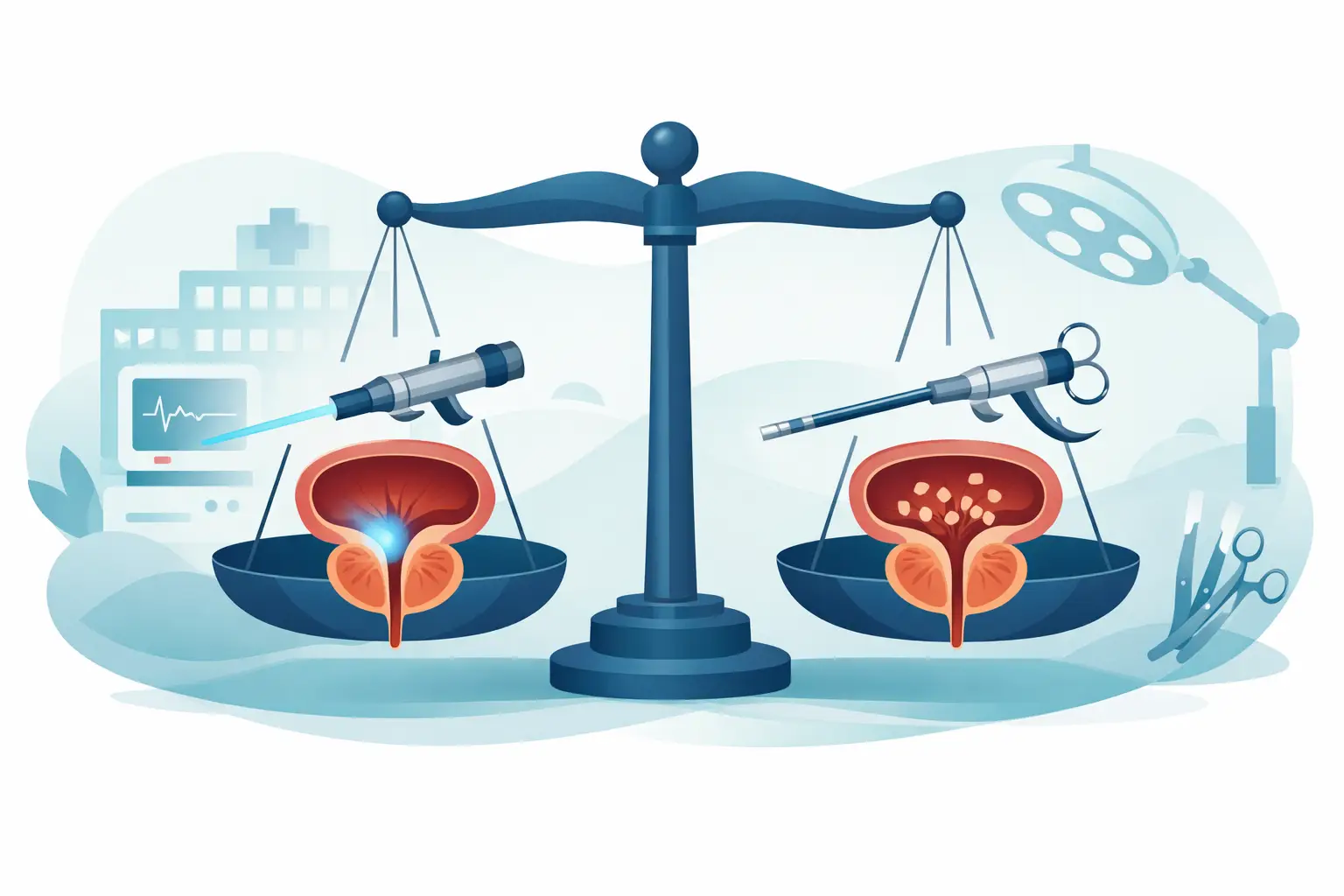

A urine stream that has grown thinner over the years, getting up frequently at night to urinate and a sudden feeling of urgency markedly affect the daily routine of many men with prostate enlargement. When HoLEP patient experiences are examined, the change most patients highlight is the relief in urine flow after surgery. However, because each patient's prostate volume, bladder function, medications and general health are different, the recovery process must also be assessed individually.
HoLEP is a closed surgical method used in benign prostatic hyperplasia in which prostate tissue is separated from its capsule with a holmium laser and removed. Not requiring an open surgical incision, offering an effective option even in large prostates and allowing the removed tissue to be sent for pathological examination are among the method's notable features. On the other hand, it requires not only the surgical technique but also correct patient selection, surgical experience and close post-operative follow-up.
Why do HoLEP patient experiences differ?
Experiences read online can be informative, but they are not enough on their own for a personal treatment decision. Of two patients who have the same operation, one may describe marked relief within a few days, while in the other the complaint of frequent urination may last longer because the bladder has been under strain for a long time. This does not mean the procedure has failed.
Especially in patients who have had obstruction for many years, cannot empty their bladder completely or have had to use a catheter, the bladder muscle may not return to its former pattern of function right away. Diabetes, neurological diseases, advanced age, previous prostate procedures and an accompanying urinary tract infection can also affect the speed of recovery.
In assessing patients, not only the weight of the prostate in grams but also the urine flow test, residual urine volume, kidney function, PSA value, ultrasound findings and, if necessary, cystoscopy results should be considered together. Individualized planning is the basis for creating realistic expectations.
What happens on the day of surgery and in the first hours?
The HoLEP procedure is usually performed under general or spinal anesthesia. The operating time may vary according to the size of the prostate, anatomical features and additional conditions such as an accompanying bladder stone. At the end of the procedure, a three-way catheter is placed in the urinary tract and irrigation may be applied to help keep the bladder clear.
In the first hours, the sensations patients feel most often are a feeling of pressure in the bladder due to the catheter, an urge to urinate or mild spasms. These complaints are usually temporary and can be controlled with the necessary medication. Pink-red urine in the catheter bag can also be expected in the early period.
The length of hospital stay is planned according to the person's clinical condition. In some patients the catheter can be removed within a short time, while closer monitoring may be needed because of a tendency to heavy bleeding, a large prostate volume, use of blood thinners or additional conditions. The aim here is not to discharge the patient in a hurry but to make sure they can urinate safely.
The first time urinating after the catheter is removed
The first time urinating after the catheter is removed is a stage that patients are both curious and sometimes anxious about. In most patients, the urine stream feels stronger than before. However, burning, mild bleeding, frequent urination or sudden urgency may be seen in the first days.
Some patients may have brief difficulty holding their urine. A few drops may leak, especially when coughing, standing up or moving suddenly. The degree and duration of this vary from person to person. Doing pelvic floor exercises at the right time and with the correct technique may contribute to recovery in suitable patients.
How does recovery progress in the first weeks?
Recovery after HoLEP does not progress in a straight line. One day the urine may be completely clear, and the next day mild bleeding may reappear because of increased activity or constipation. As scabs in the surgical area are shed during healing, temporary pink discoloration of the urine may occur, especially in the second and third weeks.
During this period, adequate fluid intake, avoiding heavy lifting and preventing constipation are important. It is necessary to be cautious about intense exercise, cycling, long journeys and sexual activity for the period recommended by the doctor. The time to return to work should be determined according to the physical demands of the job and the person's recovery.
Frequent urination and a feeling of urgency may continue for a while even after the prostate obstruction has been removed, because the bladder may have worked against high pressure for a long time. These symptoms usually subside within weeks; in some patients, additional bladder-focused medication or longer follow-up may be planned.
Sexual life and changes in ejaculation
One of the topics patients considering HoLEP often ask about is sexual life. Because many factors such as vascular health before surgery, diabetes, age, medications and an existing erection problem affect erectile function, the same outcome cannot be described for everyone.
Nevertheless, retrograde ejaculation, in which semen flows backward, may occur after prostate operations. The sensation of orgasm may continue; however, instead of coming out, the semen is directed into the bladder and is then passed with the urine. This is not harmful to health, but it is important for patients who plan to have children. Discussing this openly in the pre-operative consultation directly improves the patient experience.
Which symptoms require contacting a doctor without delay?
Mild burning and a short-term change in urine color can be expected after surgery. However, heavy bleeding with clots, inability to urinate, fever above 38 degrees Celsius, increasing pain or foul-smelling, cloudy urine should be assessed for infection or obstruction. With such symptoms, rather than waiting at home, you should contact the team that performed the operation.
In patients taking blood thinners, when the medications are stopped or restarted must always be planned by the doctor. Changing the medication schedule on one's own can pose a risk in terms of bleeding and clotting.
Factors that determine satisfaction after HoLEP
Patient satisfaction does not come only from the operation being technically successful. It makes a big difference when the patient knows before the procedure which of their complaints are caused by the prostate, is prepared for the catheter and discharge process, is properly informed about temporary complaints and can reach the team quickly when needed.
In the approach of Assoc. Prof. Dr. Uygar Miçooğulları, the HoLEP assessment is an individualized process that considers the degree of prostate enlargement together with the patient's quality of life. The aim is not only to open the urinary channel but to create a safe treatment plan that takes into account the patient's age, bladder capacity, expectations regarding sexual life, medications and accompanying conditions.
When deciding about HoLEP, you can read other people's experiences to get an idea; however, the right method for you is determined by an examination, tests and a detailed consultation with your doctor. Sharing your questions openly in the consultation, such as catheter time, the likelihood of urinary leakage, sexual life or returning to work, makes the process more predictable and safer.