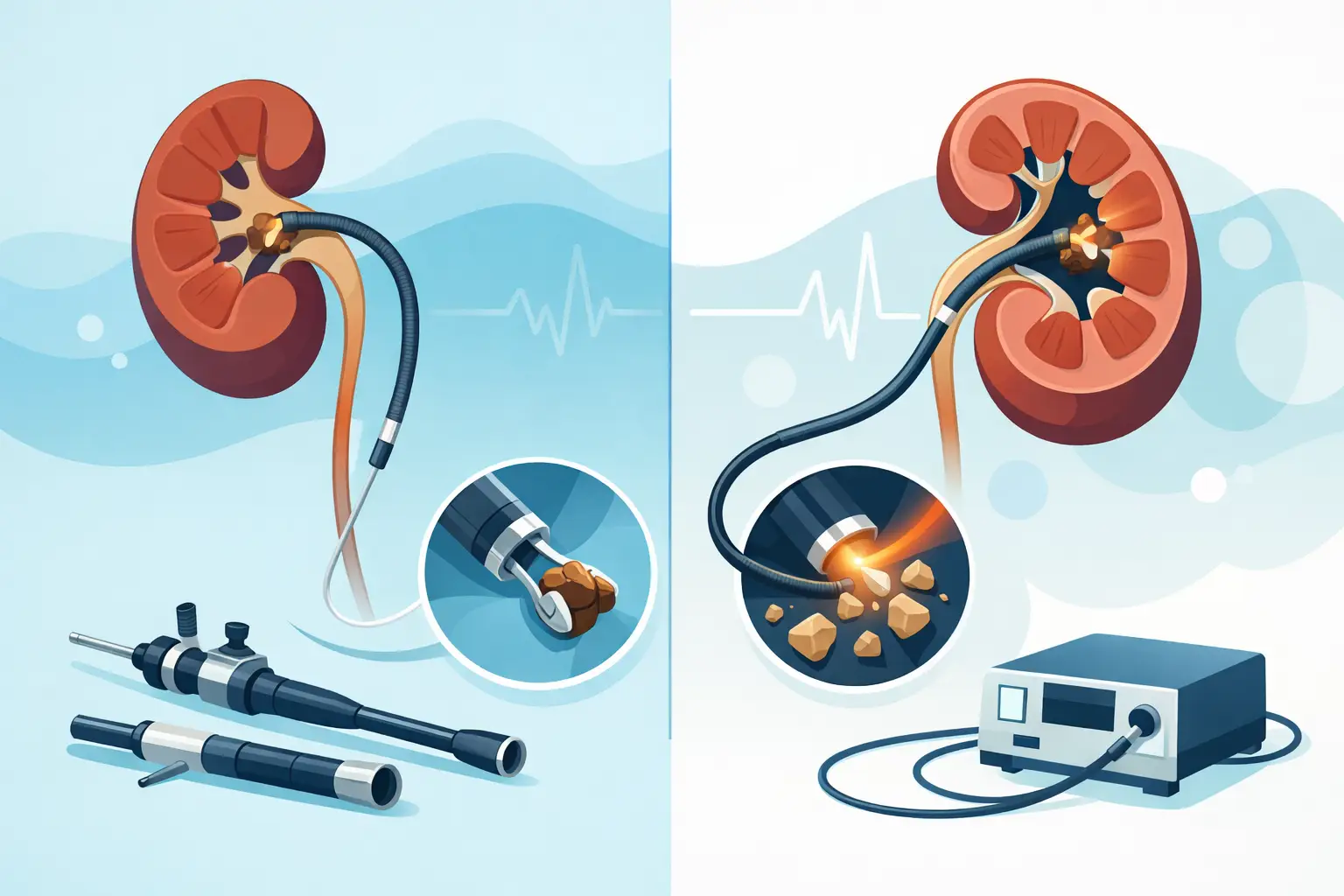

Does prostate laser surgery affect sex life? This is one of the most common concerns raised by men considering laser treatments such as HoLEP or ThuFLEP for urinary complaints. The short answer is: in most men, laser prostate surgery does not permanently impair erectile capacity; however, the way ejaculation occurs may change noticeably. Discussing this difference openly and individually before surgery is an important part of the treatment decision.
Benign prostatic hyperplasia (BPH) can lead to problems such as a weak urine stream, frequent urination, waking at night, being unable to empty the bladder completely and recurrent urinary tract infections. Laser methods aim to open the urinary passage by removing or vaporizing, in a controlled way, the part of the prostate that narrows the urethra. The goal is not to change sex life, but to relieve the patient's urinary complaints effectively and over the long term. Nevertheless, the anatomical changes at the bladder outlet can have an effect, particularly on how semen comes out.
How does prostate laser surgery affect sex life?
Sexuality is not a single function. Erection, sexual desire, orgasm, ejaculation and fertility are related to different mechanisms. For this reason, the post-operative assessment should address not only the question “Can I have intercourse?” but also changes in the experience of ejaculation and orgasm.
In laser operations for prostate enlargement such as HoLEP and ThuFLEP, the procedure is carried out in the part of the prostate tissue surrounding the urethra. The nerve bundles that are critical for erection, on the other hand, lie on the outer sides of the prostate, in a different anatomical plane. For this reason, nerves responsible for erection are not the target of benign prostate enlargement surgery performed by experienced hands.
Even so, every patient differs in baseline sexual function, prostate size, age, diabetes, cardiovascular disease, blood pressure, smoking and the medications they take regularly. Sexual outcomes after surgery are not determined by the laser technology alone. The person's overall health, the details of the surgical technique and the recovery process also affect the outcome.
Is there a risk of erectile dysfunction?
A temporary decrease in erections may be seen in some patients after laser prostate surgery. Anesthesia, anxiety caused by the stress of surgery, fear of temporary urinary incontinence, the discomfort of the catheter period and accompanying illnesses can play a role during this process. In most men, sexual confidence and erectile function also return close to their previous level as recovery is completed.
The risk of permanent erectile dysfunction is not entirely zero; however, it is generally low in laser surgery performed for benign prostate enlargement. In a patient who had an erection problem before surgery, it would not be correct to attribute the post-operative situation solely to the surgery. For example, diabetes affecting vascular health, high blood pressure or heavy smoking may affect erection quality more than the laser procedure.
That is why asking about erectile function before surgery is valuable. When necessary, hormone evaluation, a review of the medications used and an andrological approach help manage the effect of treatment on sex life more accurately.
The most common change: Retrograde ejaculation
The most common sexual change after laser prostate surgery is retrograde ejaculation. In this condition, sometimes described as “dry orgasm”, the sensation of orgasm continues; however, instead of coming out of the tip of the penis, the semen goes into the bladder and is later passed with urine. In some men, the amount of semen that comes out is markedly reduced.
This condition is not dangerous to health and does not cause pain. However, it is an important consequence for men who plan to have children, because the absence of semen or a greatly reduced amount can affect the chance of natural conception. For this reason, in patients with an active wish to have children, the degree of prostate enlargement, alternative treatment options and surgical expectations aimed at preserving ejaculation must be evaluated in detail.
Retrograde ejaculation and loss of erection are not the same thing. The patient can have erections, have intercourse and reach orgasm; only the direction or appearance of ejaculation has changed. Knowing this distinction prevents unnecessary worry after surgery.
Do orgasm and sexual desire change?
The sensation of orgasm is preserved in most patients. In the first weeks, a temporary decrease in sexual desire may be seen due to tenderness in the pelvic area, burning on urination, slight bleeding or anxiety about recovery. With improved urine flow, fewer night-time awakenings and better quality of life, some patients also describe an indirect improvement in their sex life.
That said, the intensity of orgasm or the sensation of ejaculation may vary from person to person. A decrease in the amount of ejaculate in particular can cause psychological dissatisfaction in some men. Although this subject is considered private, it should be discussed openly with the doctor. If necessary, andrological support can be planned for erectile dysfunction, premature ejaculation or performance anxiety.
When can sexual intercourse resume after surgery?
After laser prostate surgery, it is usually recommended to wait a few weeks before sexual intercourse. The exact time is determined by the extent of the procedure, complete resolution of blood in the urine, the state of urinary complaints and the patient's overall recovery. In many patients a rest period of about 2–4 weeks may be sufficient, but this may vary for larger prostates or for people whose recovery takes longer.
Attempting intercourse in the early period may increase bleeding, burning and discomfort. Not yet having full bladder control after the catheter is removed can also cause anxiety. For this reason, the signs of healing at the follow-up examination should be the guide rather than the calendar.
If there is pain, intense burning, bleeding with clots or marked urinary incontinence when resuming intercourse, you should not force it. These symptoms may often be part of the normal healing process; still, it is safer to act on the surgeon's assessment.
What should be discussed before surgery to protect sexual function?
Successful prostate treatment is not measured only by improved urine flow. A personalized plan should be made according to the patient's age, expectations, active sex life and plans to have children. In particular, the following topics should be clarified in the pre-operative consultation:
- Current erection quality and previous sexual problems
- The wish to have children and the importance placed on preserving ejaculation
- The size of the prostate, the degree of urinary obstruction and the risk of urinary retention
- Diabetes, cardiovascular disease, neurological conditions and medications used
- The benefit and possible side effects that HoLEP, ThuFLEP or another treatment method may offer the patient
Not every prostate enlargement is treated the same way. While medication and monitoring may be sufficient in some patients, surgery becomes a stronger option for people with recurrent urinary retention, bladder stones, impaired kidney function or a serious loss of quality of life. Laser methods are effective techniques that can offer the advantages of minimally invasive surgery even for large prostates; however, the possible change in ejaculation should be addressed as a natural part of the treatment decision.
Prostate surgery and prostate cancer surgery must be distinguished
This is a point patients often confuse. HoLEP or ThuFLEP are procedures aimed at opening the urinary passage in benign prostate enlargement. Radical prostatectomy, in which the entire prostate is removed because of prostate cancer, is a different operation, and its effects on erection and ejaculation can be very different.
For this reason, it is not correct to apply every experience you read online to your own operation. A sound assessment of sexual outcomes cannot be made until it is clear for which condition, which technique will be used and what the anatomical extent of the operation will be.
When planning prostate laser surgery, the best approach is to evaluate relief of urinary complaints and sexual expectations together. As in the approach of Assoc. Prof. Dr. Uygar Miçooğulları, detailed information before surgery and close follow-up afterwards help both in choosing the right method and in managing questions during recovery with confidence. Do not put off your concerns about your sex life; this subject is a natural and valuable part of your treatment plan that should be discussed.