Varicocele, which develops when the veins around the testicle become enlarged, does not have the same effect in every man. However, if there is impairment in sperm parameters, shrinkage of the testicle, a feeling of heaviness or pain in the groin, or difficulty having children, the situation should be evaluated more carefully. Microsurgical varicocele surgery is an advanced surgical method that aims to safely ligate the problematic veins while preserving the blood supply of the testicle, especially in couples who are planning to have children.
A diagnosis of varicocele does not in itself require surgery. The right decision is made by considering together the examination findings, the semen analysis result, hormonal evaluation, testicular volume, the nature of the pain and the couple's pregnancy goal. For this reason, it is not correct to say that the same approach is suitable for every patient.
Why can varicocele affect fertility?
In varicocele, the valve function in the veins that carry blood from the testicle toward the heart is impaired. As blood flows backward, the veins around the testicle become dilated. This condition is mostly seen on the left side, because the anatomical course of the left testicular vein within the abdomen is different. However, bilateral varicocele can also be detected.
Dilated veins can lead to an increase in testicular temperature, a rise in oxidative stress and a negative effect on the microenvironment of the testicle. As a result, sperm count, motility or morphology may be impaired. In some patients, sperm DNA damage may increase; this is one of the factors that can affect the chance of natural pregnancy and the success of assisted reproductive treatments.
Not every man with a varicocele develops infertility. In people with a normal semen analysis, no pain and no detected loss of testicular volume, regular follow-up may be sufficient. On the other hand, treatment comes into consideration in patients in whom a clinically evident varicocele is found on examination and impairment is seen in the semen analysis.
Who is microsurgical varicocele surgery recommended for?
The decision for surgery is not made solely on the vein diameter written in the ultrasound report. What matters is the effect of the varicocele on the patient's health and reproductive potential. The microsurgical approach is frequently planned as part of the evaluation of the male factor in couples who are unable to have children.
Surgical treatment can be considered especially in the following situations: a palpable varicocele on examination together with an abnormal semen analysis, detected loss of testicular volume or delayed testicular growth, persistent pain that affects daily life, or the goal of improving sperm quality before assisted reproductive techniques.
In azoospermia, that is, when no sperm at all is found in the semen, varicocele surgery may also be considered in some patients. However, expectations should be discussed more carefully in this group. The appearance of sperm in the semen or a meaningful change in sperm parameters after surgery does not occur in everyone. Genetic tests, hormone levels, testicular volume and previous urological history are important parts of planning.
Why is the microsurgical method preferred?
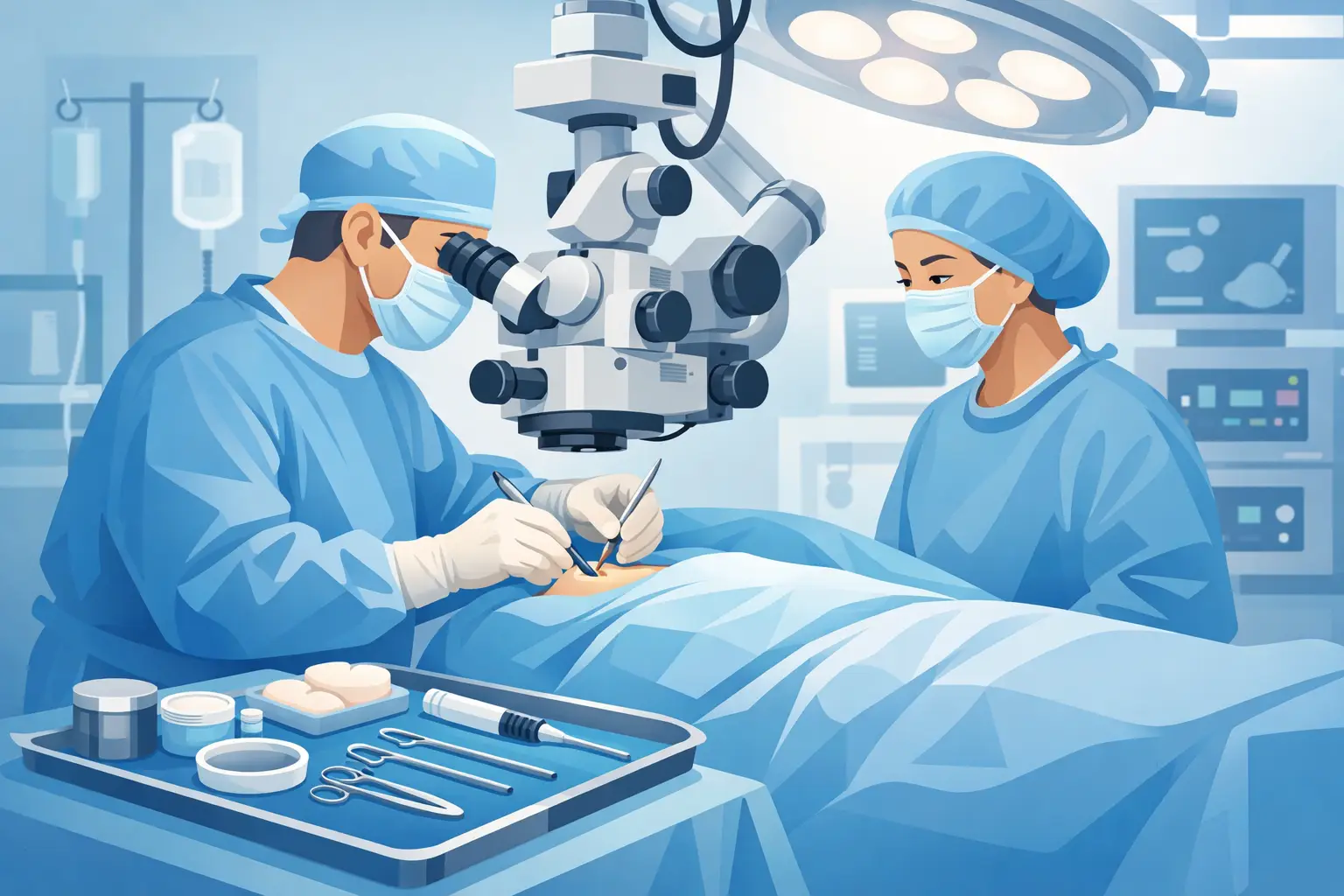
There are different surgical techniques for treating varicocele. Microsurgical subinguinal varicocelectomy is performed through a small incision below the groin. Thanks to the operating microscope, the vessels are distinguished under high magnification, and while the problematic veins are ligated, the arteries supplying the testicle, the lymphatic vessels and the structures carrying the sperm duct are preserved as far as possible.
This detail is important. Preserving the testicular artery is a fundamental safety element for the blood supply of the testicle. Preserving the lymphatic vessels helps reduce the risk of hydrocele, defined as fluid accumulation around the testicle after surgery. Because microscopic magnification also makes it easier to notice small venous branches that would otherwise not be visible, it can offer an advantage in reducing the risk of recurrence.
Still, no surgical method carries zero risk. The grade of the varicocele, the vascular anatomy, previous operations and accompanying diseases can affect the outcome. For this reason, as important as the choice of method is that the procedure is performed by a urologist experienced in microsurgery and in suitable hospital conditions.
What is done in the preoperative evaluation?
The starting point is a detailed urological examination. During the examination, the grade of the varicocele, whether it is bilateral and the size of the testicles are assessed. When necessary, the vascular structure and reflux are examined with color Doppler ultrasonography; however, imaging alone does not replace the clinical decision.
In couples who are having difficulty conceiving, semen analysis is the basic evaluation. For the semen analysis to be interpreted reliably, it may usually need to be repeated under suitable conditions at different times. Hormone tests, sperm DNA damage analysis, genetic evaluations or the age and reproductive health of the female partner also directly change the decision process in some couples.
In the evaluation carried out by Assoc. Prof. Dr. Uygar Miçooğulları, the aim is not only to detect the varicocele but to create the most realistic roadmap for the pregnancy goal. While surgery is the appropriate option for some couples, for others an approach simultaneous with IUI or IVF planning, or a different approach altogether, may be more appropriate.
How is microsurgical varicocele surgery performed?
The procedure is mostly performed under general anesthesia. A small incision is made below the groin, and the bundle of vessels and nerves called the spermatic cord is carefully exposed. Under the operating microscope, the arteries, lymphatic vessels and veins are separated from one another. The dilated veins causing reflux are ligated; the structures that need to be preserved are meticulously protected.
The duration of surgery may vary depending on whether the varicocele is unilateral or bilateral and on the vascular anatomy. In a bilateral procedure, the time may naturally be longer. A significant proportion of patients can be discharged on the same day or after a short period of hospital observation. However, anesthesia status, additional diseases and operative findings may affect the discharge plan.
The small incision can offer an advantage in terms of recovery comfort; however, it is not correct to view this procedure as a simple intervention. The purpose of the surgery goes beyond ligating the large, visible veins; it is to safely perform the anatomical separation that will preserve testicular function.
Recovery after surgery and return to daily life
In the first days after surgery, mild pain, tenderness, bruising around the incision or a feeling of tightness in the groin may occur. The pain control and wound care recommended by the physician are sufficient in most patients. Resting for the first few days, avoiding movements with a risk of impact and wearing supportive underwear can provide comfort.
Returning to desk work is usually possible within a short time, depending on the person's pain level and working conditions. For heavy lifting, intense sports, cycling, running and sexual activity, the period determined by the physician should be followed. This period varies according to wound healing and the extent of the procedure performed.
If signs such as fever, increasingly severe pain, marked swelling, discharge or redness at the wound site develop, the physician should be contacted without waiting. Scheduled check-ups are at least as valuable as these warning signs. During check-ups, wound healing and testicular examination are assessed, and an ultrasound evaluation is performed when necessary.
When do sperm parameters and pregnancy expectations change?
Because the sperm production cycle takes about three months, evaluating the effect of surgery in the early period can be misleading. Changes in the semen analysis are mostly followed after the third month; in some patients, six months or longer may be needed for more marked improvement. The degree of change in sperm count, motility and morphology differs from person to person.
It should be clearly understood that surgery does not guarantee pregnancy. The age of the female partner, ovarian reserve, the condition of the fallopian tubes, the duration of the couple's infertility and other male factors affect the chance of pregnancy. Nevertheless, with appropriate patient selection, microsurgical varicocele surgery can help increase the chance of natural pregnancy or improve the quality of sperm that can be used in assisted reproductive methods.
Although varicocele is a problem that may be put off because of privacy concerns, it is a condition that can be managed with the right evaluation. If there is pain, a change in the testicle or no result despite planning a pregnancy, consulting a urology and andrology specialist for an individualized evaluation is the most appropriate way to move the decision process from uncertainty to concrete options.