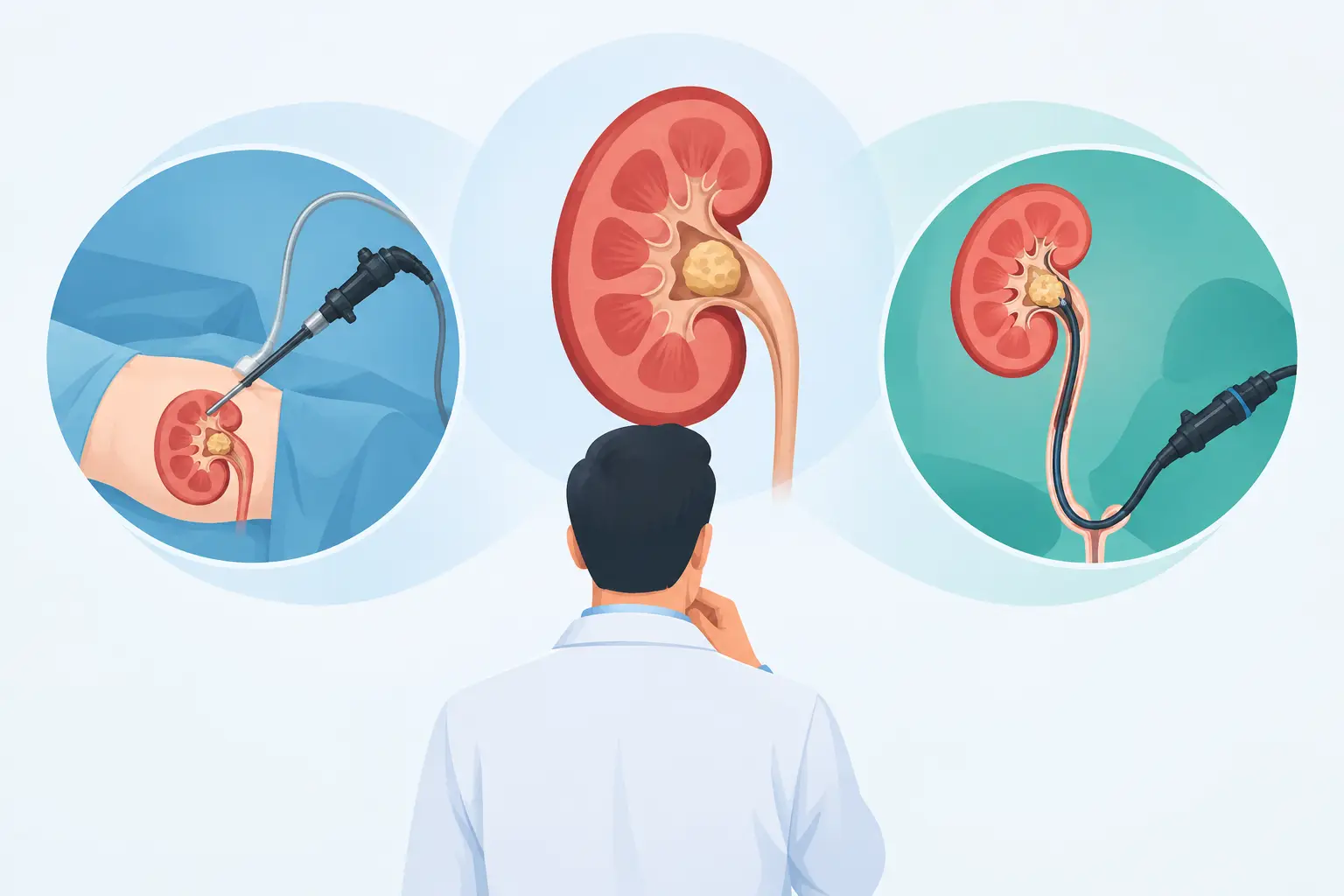
Painless blood in the urine is the most common symptom of a bladder tumor and the one that should be evaluated most carefully. It does not always mean a tumor; bleeding can also come from stones, infection or the prostate. However, especially if the bleeding is recurrent or contains clots, a urological evaluation is needed without delay. Minimally invasive bladder tumor surgery is a fundamental method both for diagnosing suspicious tissue and for carrying out the initial treatment in suitable patients.
The procedure patients know as “closed surgery” is medically called transurethral resection of bladder tumor, or TURBT. Because it is performed through the urethra without an abdominal incision, it can offer a more comfortable recovery than open surgery. However, the procedure is not just about removing the tumor. Pathological examination of the removed tissue determines the grade of the disease, its spread within the bladder wall and whether further treatment is needed.
What is minimally invasive bladder tumor surgery?
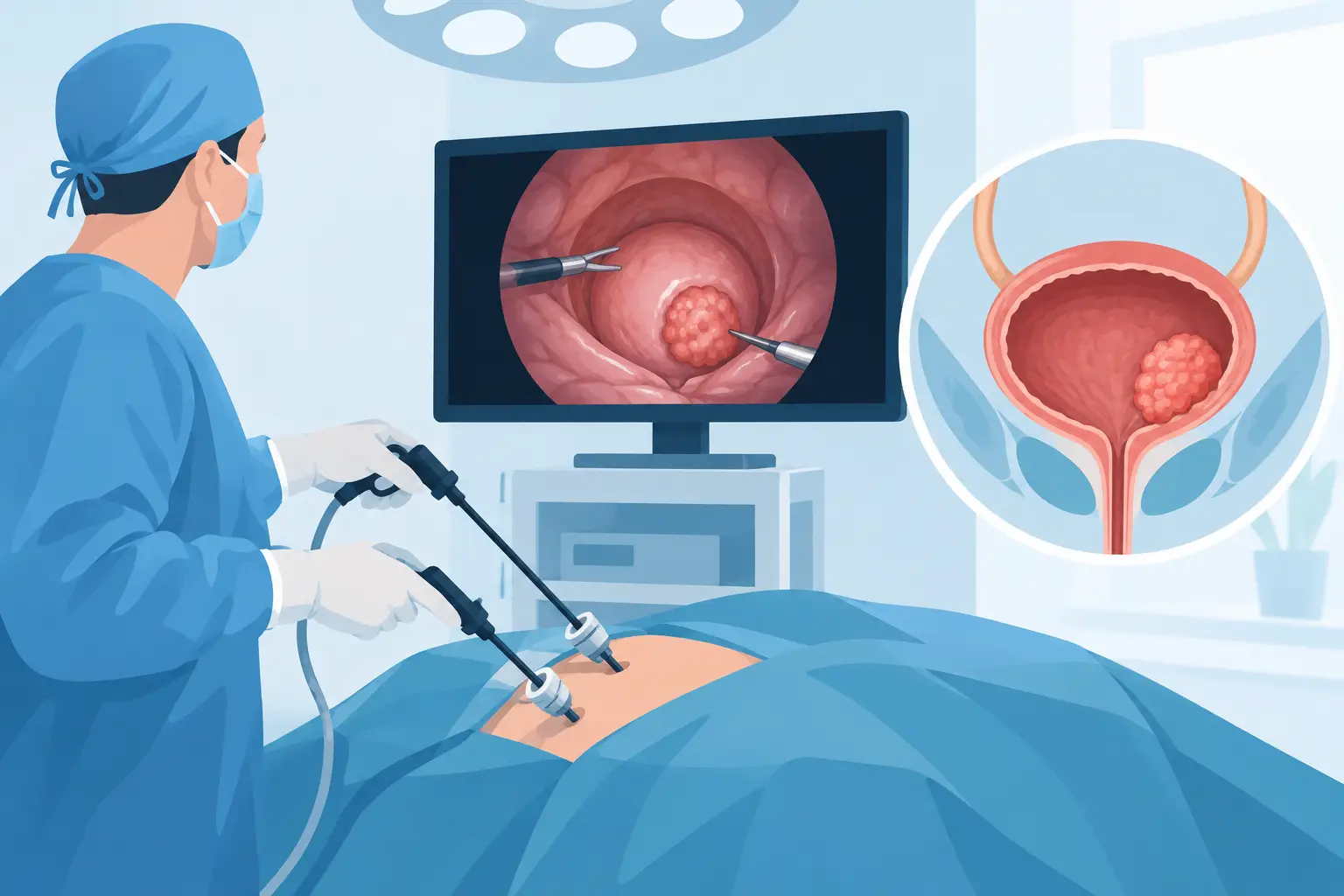
TURBT is an endoscopic procedure performed by advancing a thin camera system and special surgical instruments through the urethra into the bladder. The surgeon directly visualizes the inner surface of the bladder and evaluates the number, location, appearance and size of the tumors. Suspicious areas seen are removed in a controlled manner with a resection system that uses electrical energy, or in suitable cases different energy technologies can be used.
One of the main goals of the procedure is to clear the tumor as completely as possible. Another critical goal is to obtain an adequate tissue sample of the correct depth for pathology. The presence of the bladder muscle layer in the sample in the pathology report helps the treatment plan to be made reliably, especially for tumors suspected of being high grade or invasive.
The minimally invasive method should not be perceived as a “minor procedure.” Bladder tumors are diseases that can tend to recur. For this reason, the technical quality of the surgery, correct interpretation of the pathology and a regular follow-up program are inseparable parts of treatment.
What evaluations are done before surgery?
Suspicion of a mass in the bladder usually arises during ultrasound, computed tomography or cystoscopy. Cystoscopy is examination of the bladder with a camera passed through the urethra and allows the tumor to be seen directly. However, a definitive diagnosis usually requires pathological evaluation of the tissue removed by TURBT.
Before surgery, a urinalysis and, if needed, a urine culture are done. If there is an active infection, it is important to treat it first. A blood count, kidney function tests, medications used and general health status in terms of anesthesia are also evaluated. Aspirin, blood thinners or some herbal supplements can affect the risk of bleeding. Stopping or adjusting these medications must always be planned together with the doctors following the patient.
Smoking is one of the strongest risk factors for bladder tumors. Quitting smoking when surgery is being planned contributes not only to anesthesia and recovery but also to reducing the risk of the tumor recurring.
How does the day of the procedure go?
TURBT is mostly performed under general or spinal anesthesia. The anesthesia method is determined according to the patient's age, other illnesses, medications and the anesthesiologist's evaluation. While the patient feels no pain, the surgeon systematically examines the bladder through a resectoscope inserted through the urethra.
The tumor tissue can be removed piece by piece or, in suitable cases, in one piece. Bleeding is carefully controlled during the procedure. The duration of the surgery varies according to the size, number and location of the tumors and previous procedures. While the procedure may be shorter for a small, single lesion, it may take longer for widespread or large tumors.
At the end of the surgery, a urinary catheter is placed in most patients. Irrigating the bladder with fluid given through the catheter helps remove clots in the urine and keep bleeding under control. When the catheter will be removed is decided according to the clearing of the urine color and the patient's clinical condition.
Hospital stay and recovery
Many patients can be discharged the same day or the next day. However, the hospital stay may be longer for broad-based tumors, significant bleeding, people with other illnesses or when bladder irrigation is needed for longer. The goal here is not a quick discharge but a safe recovery.
In the first days, pink-red discoloration of the urine, mild burning, a feeling of frequent urination or temporary bladder spasms may occur. Adequate fluid intake supports recovery unless the doctor advises otherwise. Heavy lifting, intense exercise, prolonged straining and conditions that may cause constipation can increase bleeding in the early period. Therefore, the activity and medication recommendations given should be followed.
In cases such as heavy bleeding with clots, inability to urinate, fever, increasing pain or foul-smelling urine, the doctor should be contacted without waiting. Not every bleed means an emergency complication; however, a clinical evaluation is the most appropriate approach rather than guessing from a distance.
How does the pathology result change treatment?
Pathology is at the center of the treatment decision in bladder tumors. The report shows whether the tumor is low or high grade, whether it remains only in the superficial layer, and whether it has progressed into the connective tissue or muscle layer. This information allows the risk of recurrence and progression to be classified.
In tumors that have not progressed into the muscle layer, TURBT can be both diagnostic and therapeutic. However, depending on the characteristics of the tumor, drug administration into the bladder may be recommended. In some suitable patients, a single dose of intravesical chemotherapy may be given in the early period after surgery. In intermediate- and high-risk groups, BCG or other intravesical treatments come into consideration according to specific schedules.
A second TURBT may be needed for tumors that are high grade, large, multiple, frequently recurring, or in which muscle tissue could not be adequately evaluated in the first sample. This does not mean the first surgery failed. The aim is to make sure no tumor has been left behind and to make staging more reliable.
In bladder tumors that have progressed into the muscle layer, minimally invasive surgery is generally aimed at diagnosis and staging. Treatment is planned on a multidisciplinary basis, depending on the patient's general condition, imaging results and tumor characteristics, in terms of more extensive surgeries such as radical cystoprostatectomy, systemic treatments and, in some selected cases, bladder-sparing approaches.
Why is follow-up necessary after minimally invasive bladder tumor surgery?
Bladder tumors can come back even if they have been successfully cleared. For this reason, instead of thinking “I've had the surgery, the problem is completely over,” it is necessary to follow a personalized follow-up plan. Follow-up uses cystoscopy, urine cytology and, when necessary, imaging methods.
Follow-up intervals are not the same for everyone. For low-risk, single and small tumors, follow-up may be less frequent. For high-risk tumors, cystoscopic checks are done more often and the upper urinary tract is also evaluated at regular intervals. Discussing the pathology result in detail helps the patient understand why they are being called for check-ups at a certain frequency.
As in the approach of Assoc. Prof. Dr. Uygar Miçooğulları, postoperative communication is as valuable as technology in planning minimally invasive surgery. Explaining the pathology result clearly, planning possible additional treatments on time and creating the follow-up schedule together with the patient help this process proceed safely.
If you have noticed blood in your urine, do not postpone an evaluation even if the complaint has gone away on its own. An early urological examination both reduces unnecessary worry and allows the necessary treatment to be planned at the right time.