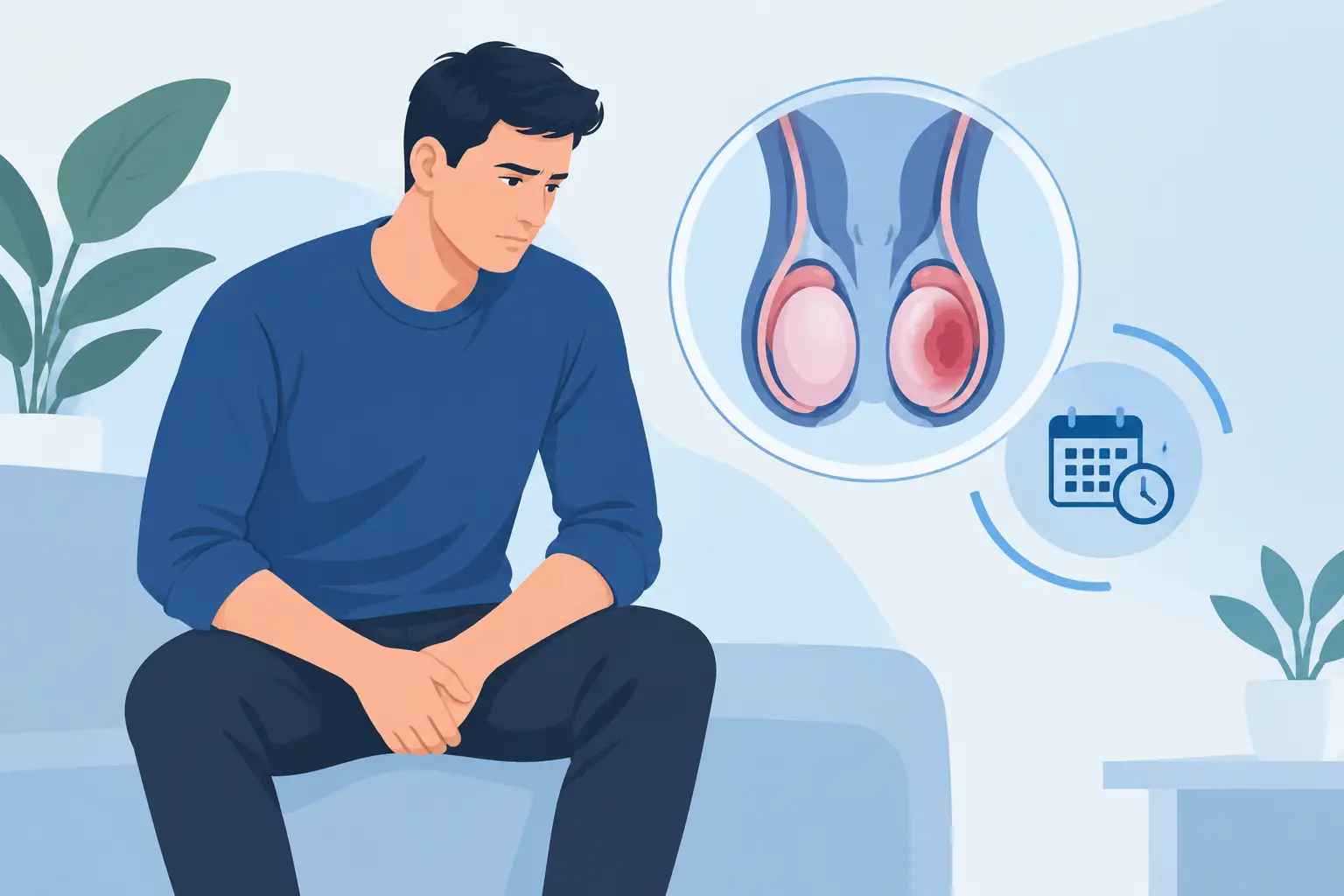
Exercises for urinary incontinence after HoLEP are an important part of the recovery plan for patients who want to regain a sense of control after surgery. Leaking a few drops, especially when coughing, sneezing, standing up or walking, can be worrying. However, this is temporary in most patients; pelvic floor exercises performed with the correct technique, patient follow-up and your doctor's recommendations make a meaningful contribution to recovery.
HoLEP is a minimally invasive laser treatment for urinary obstruction caused by prostate enlargement. The surgery removes the part of the prostate tissue that compresses the urethra, and urine flow becomes easier. However, the bladder outlet and the muscles that hold urine may need time to adapt to the new arrangement after surgery. Urinary incontinence does not mean the surgery has failed, but the process needs to be evaluated individually.
Why does urinary incontinence occur after HoLEP?
When prostate enlargement obstructs urine flow for a long time, the bladder works at higher pressure. Even though the obstruction is removed after HoLEP, the bladder and the continence mechanism need to adapt to this change. Temporary sensitivity in the surgical area, weakness in the sphincter muscle and a tendency of the bladder toward urgency can contribute to leakage.
The type of leakage also matters. Some patients experience stress-type leakage in the form of dribbling at moments when abdominal pressure rises. In others, a sudden, strong urge to urinate and not reaching the toilet in time is the main issue. Pelvic floor exercises are particularly helpful for stress incontinence; if urgency is the dominant complaint, fluid habits, bladder training and, when necessary, medication should also be considered.
The recovery time is not the same for everyone. The size of the prostate, bladder function before surgery, age, accompanying neurological diseases, diabetes, previous prostate procedures and correct performance of the exercises all affect this period. Needing pads in the first weeks is possible. In most patients, clear improvement is expected over weeks to months; if the complaint persists, it should be examined in detail at a follow-up visit.
Exercises for urinary incontinence after HoLEP: The basic technique
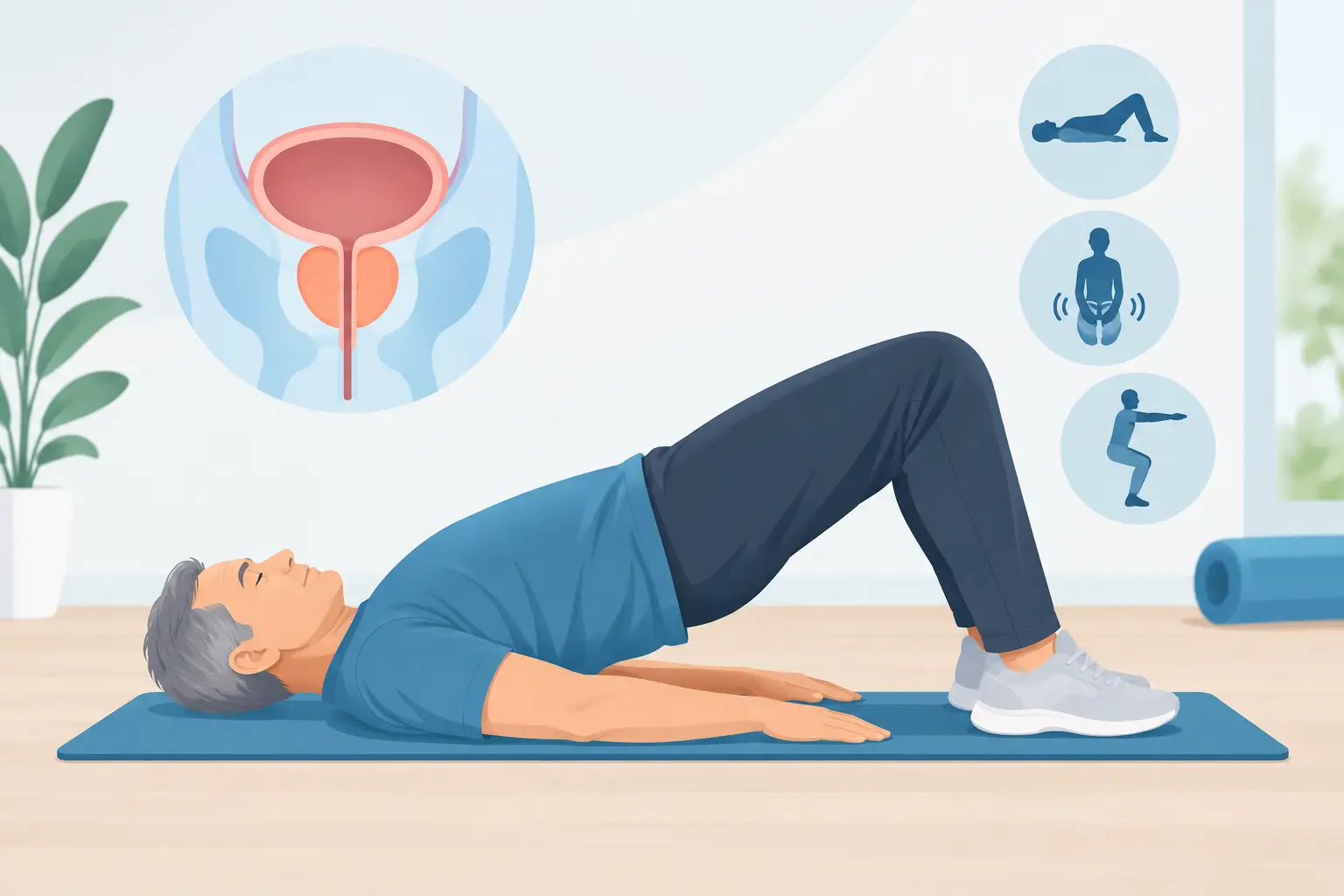
The goal of these exercises is to strengthen the pelvic floor muscles that support the bladder neck and urethra. They are commonly known as Kegel exercises. The key to success is not squeezing very often or very hard, but being able to contract the right muscle for the right length of time and then fully relax it.
How can you find the right muscle?
To identify the pelvic floor muscle, as a first step you can try briefly stopping the stream once while urinating. The muscle that stops the flow is the muscle group we want to work. However, this method is only for identifying the muscle. Regularly stopping and starting the stream while urinating should not be used as an exercise method, as it can interfere with complete emptying of the bladder.
With a correct contraction, you feel the penis and testicles lift slightly and a drawing-in around the anus. Squeezing the abdominal muscles, tightening the buttocks, pressing the legs together or holding your breath is not the correct technique. During the exercise, your shoulders should be relaxed and you should breathe normally.
Starter program
Start when your bladder is empty and you are in a comfortable position. In the first days, lying on your back or sitting can make it easier to feel the muscle. Gently contract the pelvic floor for 3 seconds, then relax completely for 5-6 seconds. Do this 10 times. Three sessions a day, in the morning, at noon and in the evening, can be the target.
Muscles develop not only through effort but also through rest. For this reason, it is necessary to relax sufficiently after each contraction. If you feel pain in the lower abdomen, marked fatigue or cramping during contraction, reduce the number of repetitions. The aim is not to exhaust the muscles by the end of the day, but to build a regular and controlled habit.
If you start doing the movement comfortably within a week, you can increase the hold time to 5 seconds, then to 8-10 seconds. After each long contraction, relax for at least the same amount of time. In addition, quick 1-second squeeze-and-release contractions can be done. Quick contractions help develop the continence reflex before coughing, sneezing or sudden movements.
Bring it into daily life
The practical value of pelvic floor exercise comes not only from doing it at set times but from adapting it to everyday movements. Try gently contracting the pelvic floor just before standing up, lifting a heavy bag, climbing stairs or coughing. This habit can support the urethra when abdominal pressure rises.
That said, doing the exercise by staying contracted all day is not correct. The pelvic floor must know how to both contract and relax. Do not strain to urinate on the toilet; if you are constipated, the need to strain can also put a load on the pelvic floor, so diet and activity habits should be reviewed.
When should you start the exercises?
Which day to start the exercises after the catheter is removed following HoLEP should be determined according to the course of the operation and your doctor's examination findings. In general, if pain is under control and the patient can urinate comfortably, gentle contractions may be recommended early on. However, the same program is not applied to everyone.
Burning, bleeding or urgency during urination can occur for a while after surgery. Doing the exercises strenuously while these complaints are present is not beneficial. The priority is adequate fluid intake, regular use of the medications your doctor recommends and following the recovery instructions. If you have heart, kidney or other diseases, your daily fluid amount should also be planned individually.
Common mistakes can delay recovery
The most common mistake is working the abdominal and buttock muscles instead of the pelvic floor. The second mistake is excessively increasing the number of repetitions in the hope of getting quick results. When the muscles become fatigued, the sense of control can decrease. If you notice that leakage increases markedly after exercise, it is advisable to reduce your program and talk to your doctor.
Another mistake is going to the toilet very frequently and constantly emptying the bladder in small volumes. Of course, forcibly holding urine for a long time is not recommended; however, if your doctor considers it appropriate, bladder training aimed at gradually adjusting toilet intervals can be done. Caffeinated drinks, alcohol, carbonated drinks and excessive fluid intake in the evening can increase urgency and leakage in some patients.
When should you see your doctor?
Fever, chills, increasing pain, foul-smelling or very cloudy urine, increasing bleeding with clots, inability to urinate or newly developed severe leakage should be evaluated without waiting. These may be signs of infection, urinary obstruction or a different problem.
If leakage does not decrease within a few months, significantly affects daily life or pad use remains high, a detailed urological evaluation is needed. Through examination, urinalysis, ultrasound, bladder function tests or referral for pelvic floor physiotherapy, the source of the problem can be determined more clearly. In patients who need it, treatments in addition to exercise can be planned.
After HoLEP, the goal is not just to reduce the number of pads; it is to walk with confidence, take part in social life comfortably and feel in control of your bladder again. Doing the exercises with the correct technique, regularly and in communication with your doctor is a safe way to move toward this goal.