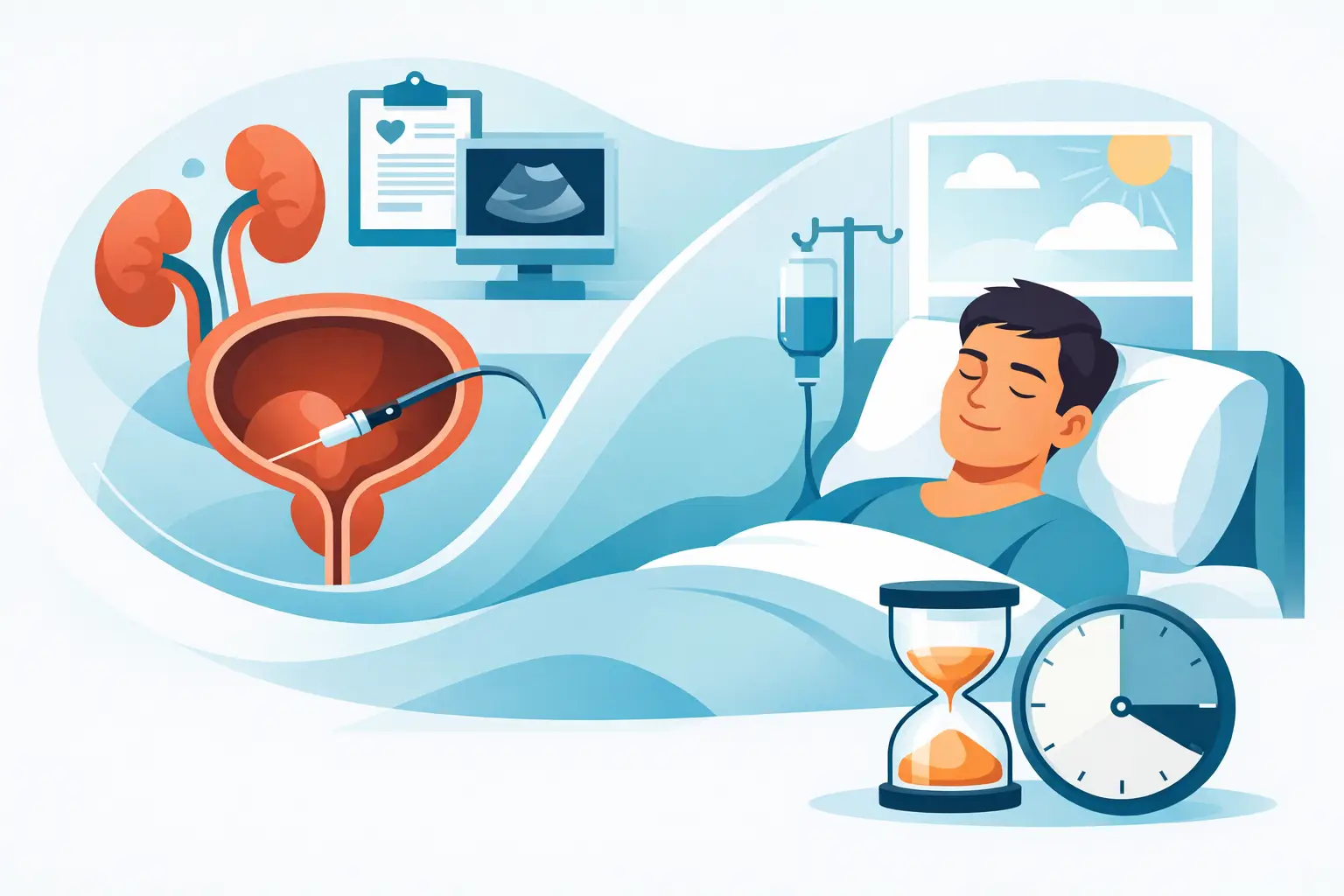
Most patients notice a clear improvement in urine flow shortly after surgery; however, HoLEP recovery time is not measured by this early relief alone. Catheter removal, changes in urine color, a temporary burning sensation, the return of full urinary control and a confident return to your daily routine all happen at different times. For this reason, rather than giving every patient a single date, it is more accurate to look at recovery in stages.
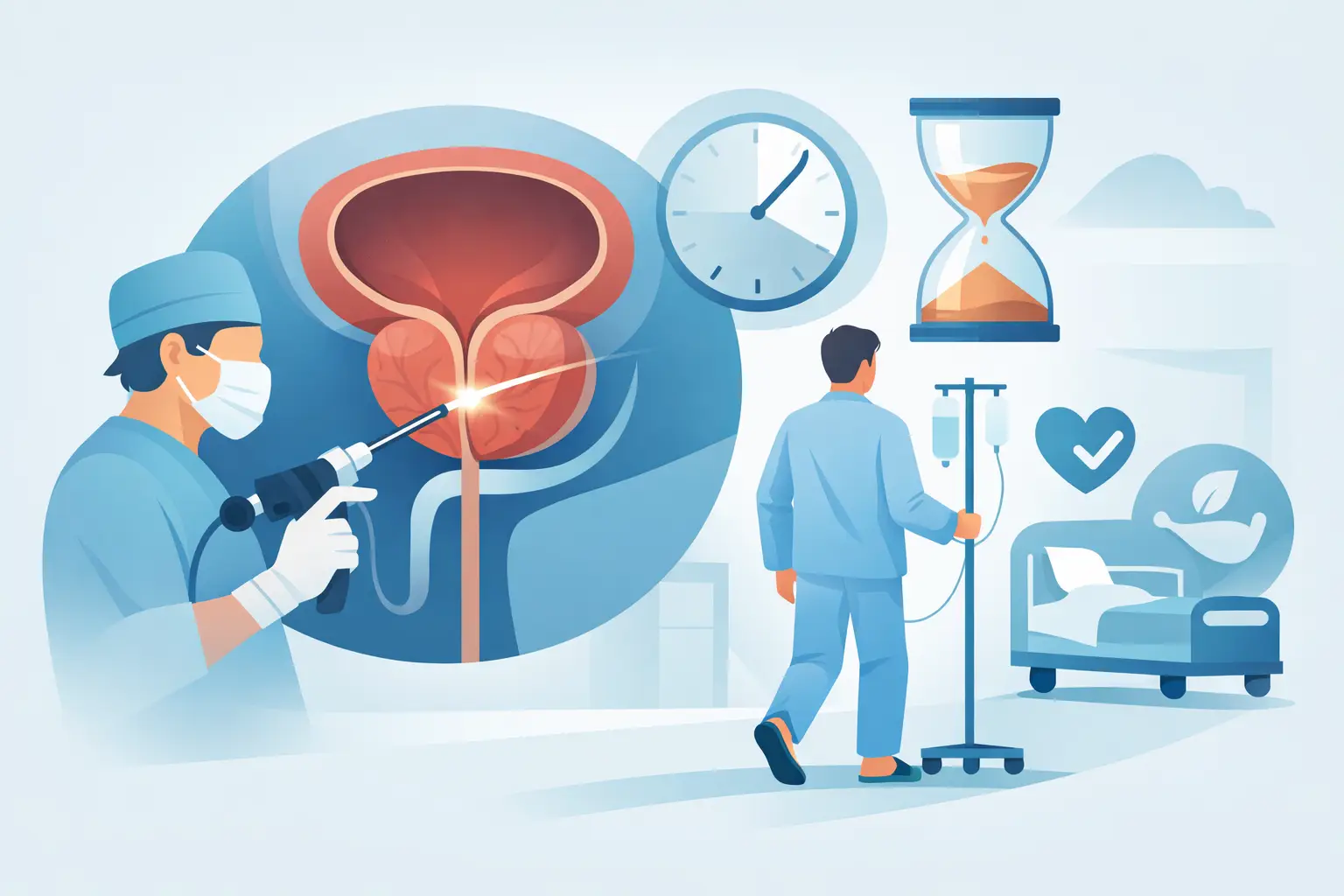
HoLEP is a minimally invasive surgical technique used in benign prostatic hyperplasia (BPH), in which prostate tissue is separated from its capsule and removed using a holmium laser. Important advantages compared with open prostate surgery include access without large incisions, strong control of bleeding and the ability to achieve effective results even in large prostates. Even so, the procedure is still surgery, and the bladder and urinary tract need time to recover.
What are the stages of HoLEP recovery?
Recovery in the first few days and full functional recovery are not the same thing. The size of the prostate, the condition of the bladder muscle before surgery, any blood thinners being used, accompanying conditions and the extent of the operation can all directly affect this process.
Hospital stay and the catheter period
After HoLEP, a urinary catheter is usually placed in the bladder. The catheter allows urine to drain freely and, when needed, also makes bladder irrigation possible. In many patients the catheter can be removed within a day or on the following day; however, this period may be longer depending on the amount of blood in the urine, the prostate volume and the clinical assessment.
After the catheter is removed, burning, frequent urination and sudden urges may be felt the first few times you pass urine. These symptoms are mostly caused by the sensitivity of the urinary tract and bladder after the procedure. Some patients feel a strong urine flow right away in the first days, while in others the bladder may need a little more time to work regularly again.
The first week: changes in urine color and sensitivity
In the first few days after discharge, it is common for urine to look pink, light red or tea-colored. Walking a lot, standing for long periods, straining due to constipation or not drinking enough fluids can make bleeding more visible. Fluctuations in urine color do not always mean there is a problem; nevertheless, bleeding with clots, being unable to pass urine or increasingly bright red bleeding should be assessed.
During the first week, frequent urination, getting up at night to urinate and burning during urination may continue. The aim in this period is for the patient to stay active without overexertion and to avoid habits that may irritate the bladder. Drinking enough fluids is helpful; however, patients who must restrict fluids because of heart or kidney disease should follow their own doctor's advice.
Weeks two to four: returning to daily life
Many patients with desk jobs can return to work within about 1–2 weeks, depending on their general condition and their doctor's assessment. Those whose work involves physical effort may need to wait longer. Heavy lifting, strenuous exercise, cycling and activities that increase abdominal pressure are generally not recommended in the first weeks.
During this period, urine flow becomes more regular. Even so, a sudden sense of urgency or very mild urinary leakage may temporarily persist in some patients. Recovery may be more gradual, especially in patients who had severe obstruction for a long time before surgery, a weakened bladder muscle or a very large prostate. In suitable patients, exercises aimed at correctly working the pelvic floor muscles can help regain urinary control.
Full recovery after the fourth week
Most patients return to their daily routines to a large extent within 4–6 weeks. However, complete internal healing of the urinary tract and the settling of bladder habits may take 6–12 weeks. During this time, the strength of the urine flow, how often you get up at night and the sense of urgency are reassessed over time.
When necessary, the prostate tissue removed during HoLEP is sent for pathological examination. Follow-up visits should assess not only healing but also the pathology result, urine flow, residual urine volume and the patient's complaints together. In this way, a personalized follow-up plan can be created.
What should you pay attention to for a smoother recovery after HoLEP?
The best way to support recovery is not to rush your body. In the first weeks, short and light walks can help circulation; but returning to strenuous sports too early may increase the risk of bleeding and discomfort. Avoiding constipation is also important, because straining increases pressure in the pelvic area. A fiber-rich diet and supplements your doctor considers appropriate can be helpful in this respect.
Alcohol, very spicy foods, heavy caffeine intake and smoking may worsen urinary symptoms in some patients. Limiting these triggers, especially in the first days, helps make urgency and burning more manageable. Antibiotics, painkillers or other prescribed medications should be taken as directed; when to restart blood thinners should be decided only on your doctor's advice.
It is not right to give a fixed date for returning to sexual activity. If bleeding has fully resolved and pain and significant urinary symptoms have eased, sexual activity can be allowed in most patients after a few weeks. However, after HoLEP, semen may flow backward into the bladder, which is known as retrograde ejaculation. This does not necessarily take away the sensation of orgasm; however, patients who are planning to have children should discuss this in detail before surgery.
Which symptoms require contacting your doctor without delay?
Mild burning and limited changes in urine color may be expected signs of healing. However, some symptoms require ruling out conditions such as infection, clot formation or a blockage of urine flow. In case of a fever of 38 °C (100.4 °F) or higher, chills, increasingly severe pain, heavy bleeding with clots, being completely unable to pass urine after the catheter is removed, foul-smelling urine or marked weakness, you should contact your care team on the same day.
Close follow-up is even more important for people who use blood thinners, have kidney function problems or have conditions such as diabetes that may affect healing. Rather than assuming symptoms are normal and waiting at home, informing your doctor early is the safe approach.
Factors that make recovery time individual
Two patients operated on with the same technique may not have exactly the same recovery experience. The volume of the prostate, whether urinary retention occurred before surgery, additional problems such as bladder stones or diverticula, and the patient's general health may affect the timeline. For this reason, although average times found online can be a useful guide, they do not replace a personal follow-up plan.
In HoLEP treatment planned by Assoc. Prof. Dr. Uygar Miçooğulları, accessible post-operative follow-up is as important a part of the process as the pre-operative assessment. The aim is a safe recovery, taking into account the patient's urinary complaints, medications, lifestyle and expectations together.
During recovery, the most valuable measure is not the number of days on the calendar but a steady decrease in your symptoms. When a symptom worries you, sharing it with your doctor rather than putting it off makes for a more comfortable and safer recovery.