One of the most common uncertainties couples face on the path to having a child is not knowing which partner the problem comes from. The answer to the question what are the symptoms of male infertility is often more complex than expected: male infertility can occur without causing noticeable pain, loss of sexual desire or any complaint that affects daily life. For this reason, rather than relying only on signs that can be noticed from the outside, it is necessary to plan a urology and andrology evaluation at the right time.
Medically, infertility is considered to be the failure to achieve pregnancy within one year despite regular, unprotected sexual intercourse. If the female partner is over 35, this period is generally taken as six months. The evaluation should not focus only on the woman; examining the couple together and at the same time reduces lost time.
Are there always symptoms in male infertility?
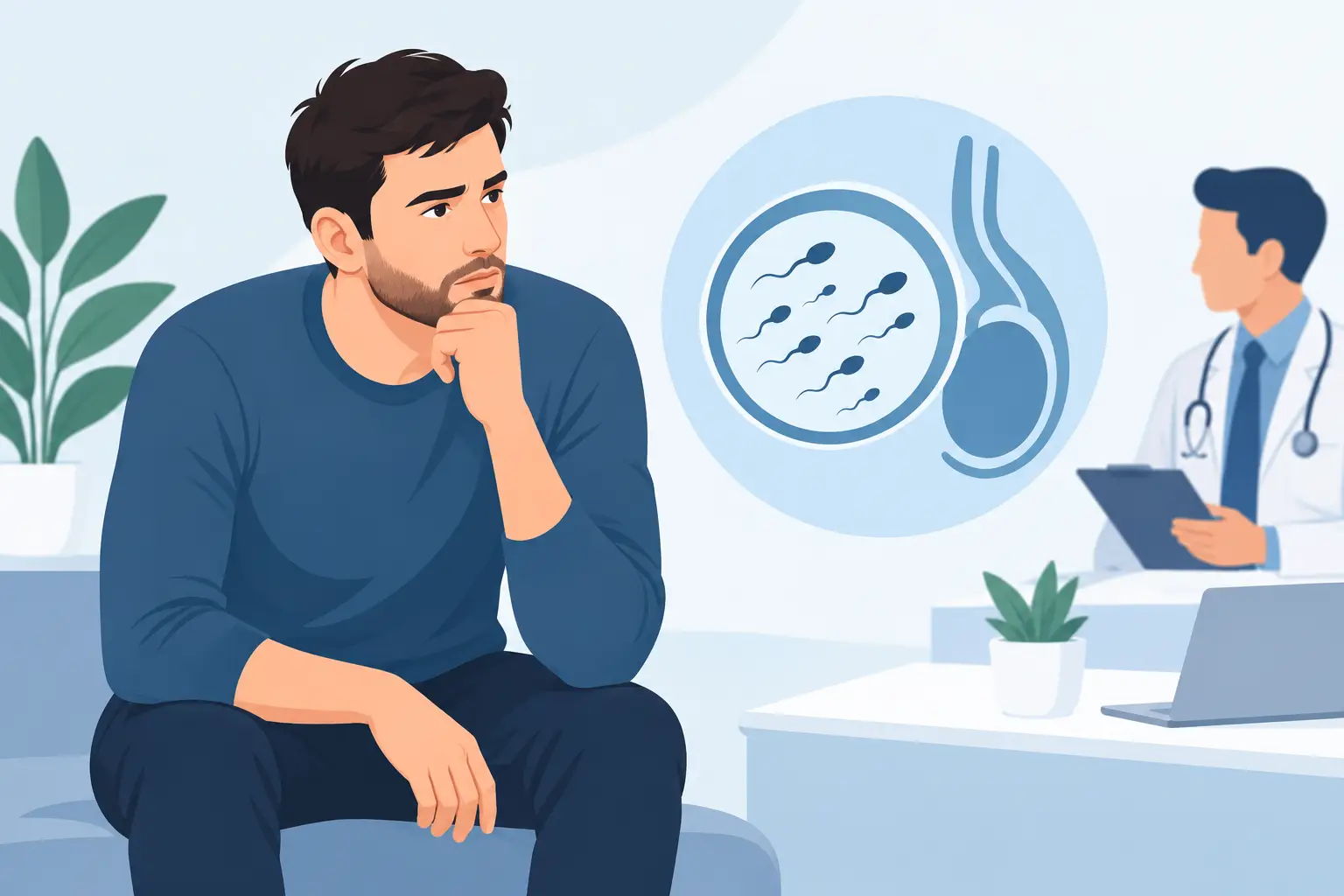
No. Many men with a low sperm count, insufficient motility or a high proportion of abnormally shaped sperm may have no symptoms at all. Not having erectile problems, ejaculation appearing normal or having a healthy sexual desire does not necessarily mean that sperm production and sperm quality are normal.
This is the main reason why male infertility is sometimes only noticed when pregnancy cannot be achieved. Sperm cells cannot be seen with the naked eye; the amount or color of semen alone also does not provide reliable information about sperm count. A definitive evaluation requires a spermiogram, that is, a semen analysis, performed under appropriate conditions.
Nevertheless, some findings may point to an underlying andrological problem. The presence of these signs does not establish a diagnosis of infertility; however, it does require a specialist evaluation.
What are the symptoms of male infertility?
Not achieving pregnancy
The most basic symptom is pregnancy not occurring despite unprotected intercourse. This alone does not mean that the problem lies with the man. Ovulation patterns, the fallopian tubes, the structure of the uterus, the woman's age and the frequency of intercourse also affect the chance of pregnancy. However, if pregnancy is delayed, it is not right to postpone the man's evaluation.
Shrinking, softening or structural changes in the testicles
A decrease in testicular volume, the testicles feeling noticeably soft, or significant differences between the two testicles that develop later may be related to sperm production. Small testicles noticed especially after puberty may be associated with previous infections, hormonal problems, genetic causes or other conditions that damage the testicle.
A palpable hardness or mass in the testicle, or rapidly developing enlargement, requires a urology examination without delay, regardless of infertility. Rather than interpreting these findings yourself, it is safer to have them evaluated with a physical examination and scrotal ultrasound.
Complaints related to varicocele
Varicocele is the enlargement of the veins around the testicle and is a common correctable cause of male infertility. In some men it causes no symptoms. In others, a dull ache that increases especially after standing for a long time, a feeling of heaviness, fullness in the left testicle or palpable enlarged veins may be seen.
The extent to which a varicocele affects sperm production is understood by evaluating the examination findings, semen analysis results, testicular volume and the couple's pregnancy plans together. Not every varicocele requires surgery. However, in patients with a clinically significant varicocele and impaired sperm parameters, microsurgical varicocelectomy may be an effective treatment option in suitable patients.
Sexual function and ejaculation problems
Erectile problems, a marked decrease in sexual desire, difficulty ejaculating or no semen coming out at all after orgasm may be a sign of a hormonal, neurological or structural problem in some men. In the condition called retrograde ejaculation, semen flows into the bladder instead of coming out; this may be associated in particular with certain medications, diabetes, previous surgeries or nerve damage.
Not every one of these problems directly impairs sperm production. Still, they can reduce the chance of pregnancy because they prevent regular intercourse or make it harder for sperm to reach the egg. Complaints that are postponed because of privacy concerns can often be managed with a detailed consultation and personalized treatment.
Findings that suggest hormonal changes
A decrease in beard and body hair, a marked loss of muscle mass, breast enlargement, low energy and reduced sexual desire may be related to changes in testosterone or other hormones. The pituitary gland, thyroid diseases, high prolactin levels and certain genetic conditions can affect both hormonal balance and sperm production.
These symptoms are not specific to infertility. For this reason, using testosterone supplements on your own initiative is not the right approach. Testosterone taken from outside the body can suppress sperm production in the testicles in some men, making pregnancy plans even more difficult.
Conditions that can cause infertility but may not cause symptoms
Some risk factors do not cause any complaints. These include a history of undescended testicle in childhood, testicular inflammation after mumps, groin or testicular surgery, chemotherapy or radiotherapy, diabetes, genital infections and familial genetic diseases.
Illnesses with high fever, heavy smoking, anabolic steroids, excessive alcohol, certain medications and long-term heat exposure can also negatively affect sperm parameters. Although the effect of saunas or hot environments varies from person to person, constant exposure of the testicles to high heat is not recommended. Men with occupational chemical contact or heavy metal exposure should also share their working conditions with their physician.
Lifestyle adjustments can support sperm quality; however, they may not be sufficient on their own in severe sperm abnormalities, blockages or genetic causes. For this reason, instead of losing months with herbal products or uncontrolled supplements, the cause needs to be clarified.
How does the diagnostic process work?
The evaluation begins with a detailed history. How long the couple has been trying to conceive, previous pregnancies, childhood illnesses, surgeries, medications used, sexual function, occupational exposures and lifestyle habits are asked about. This is followed by a careful physical examination of the testicles, epididymis, sperm ducts and for varicocele.
The spermiogram is the basic test for diagnosis. It evaluates semen volume, sperm count, motility, shape characteristics and vitality. Because sperm values can vary over time, a repeat test may be requested at an appropriate interval if the result is abnormal. For most patients, it is not right to reach a firm conclusion from a single result.
Depending on the examination and spermiogram findings, hormone tests, scrotal ultrasound, urine tests, genetic analyses or sperm DNA damage assessment may be planned. If there is no sperm at all in the semen, that is, if azoospermia is detected, distinguishing between a production disorder and a blockage in the ducts is particularly important. This distinction changes the plan for medical treatment, microsurgical procedures or sperm retrieval methods such as micro-TESE.
When should you see a urology and andrology specialist?
If pregnancy has not occurred despite regular unprotected intercourse for a year, evaluation should not be delayed. If the female partner is over 35, waiting six months is sufficient. In addition, it is beneficial for men with testicular pain, testicular shrinkage, palpable enlarged veins, ejaculation problems, or a history of undescended testicle or cancer treatment to seek help earlier.
In the andrology evaluation carried out by Assoc. Prof. Dr. Uygar Miçooğulları at Medical Park İzmir Hospital, the aim is not just to read the sperm result. It is to create a personalized roadmap by considering the extent of the problem, correctable causes and the couple's timeline together.
Planning a pregnancy can be a race against time; however, not every low sperm value requires the same treatment. An accurate diagnosis makes it possible to avoid unnecessary procedures and, in suitable patients, to turn in time to medical treatment, microsurgical varicocele treatment or assisted reproduction options. The first step, whether or not there are symptoms, is not to postpone the issue and to get a specialist evaluation that respects your privacy.