The period after penile prosthesis surgery is an important recovery process that turns the success of the operation into everyday comfort. The questions patients ask most often are how long the pain will last, when the swelling will subside, when the prosthesis can be used, and when they can return to sexual intercourse. The answers may vary depending on the type of prosthesis, accompanying conditions, previous surgeries and the individual's wound healing rate.
Penile prosthesis surgery is a long-lasting and effective treatment option for erectile dysfunction that has not responded adequately to medications, vacuum devices or injection therapies. However, realistic expectations, the right surgical technique and close follow-up are at least as decisive as the operation itself. The aim is not only to place an implant, but also to ensure pain control, reduce the risk of infection and help the patient return to sexual life with confidence.
What to expect in the first days after surgery?
In the first days after penile prosthesis surgery, tenderness, swelling and bruising may be seen in the penis, scrotum and groin area. In particular, mild to moderate swelling of the scrotum is a natural part of the healing process in most patients. The prescribed painkillers, cold application and rest make this period more comfortable.
In some patients, a urinary catheter may be used for a short time after surgery. The catheter is usually removed early, when the surgeon considers it appropriate. The timing of discharge is planned according to the patient's general condition, pain control, ability to urinate and accompanying conditions. Many patients can go home after a short observation period; however, individual recommendations always take priority.
In the first days, the penis appearing partially erect due to the surgical technique or the positioning of the prosthesis may cause concern. This is not seen in the same way in every patient and is evaluated at follow-up examinations. As the swelling decreases, the appearance of the penis and scrotum becomes more natural.
How are pain and swelling managed?
Pain is expected to be more pronounced in the first few days. If the pain increases rather than decreasing over time, cannot be controlled despite medication, or is accompanied by fever, the physician should be informed. Prescribed medications should be used at the recommended dose and for the recommended duration; in particular, regarding blood thinners or other regularly used medications, the physician's recommendations should not be deviated from before or after surgery.
Cold application should be done without direct contact with the skin, at short intervals and as recommended by the surgeon. Underwear that applies excessive pressure or uncontrolled bandaging may cause discomfort rather than benefit. Supportive, comfortable underwear can help control scrotal swelling.
Wound care after penile prosthesis surgery
Keeping the surgical incision clean and dry is a basic step in preventing infection. When the dressing should be changed, when showering is allowed and how the area should be cleaned should follow the instructions of the team that performed the operation. The dressing materials and surgical approach used may not be the same at every center.
In the first days, it is necessary to avoid standing for long periods, doing heavy housework, lifting heavy objects and activities such as cycling that put pressure on the perineal area. Constipation can also increase intra-abdominal pressure and pain. For this reason, adequate fluid intake, a fiber-rich diet and, if necessary, supportive treatments recommended by the physician are important.
Mild redness or tenderness in the wound area does not always mean infection on its own. In contrast, spreading redness, foul-smelling discharge, a marked increase in warmth, opening of the wound or steadily increasing swelling should be evaluated. Penile prosthesis infection is a rare but serious complication; prompt intervention is important for preserving the implant.
When can you return to daily life?
Patients with desk jobs can often return to work within about one to two weeks, depending on their recovery. In occupations that require physical effort, this period may be longer. For driving, it is expected that the need for painkillers has decreased, that the patient can move comfortably and that they have the control needed for sudden braking.
Walking is generally beneficial in the early period because it supports blood circulation; however, pace and distance should be increased gradually. For weight training, running, swimming, long motorcycle rides and contact sports, the physician's approval should be awaited. Feeling well in the early period does not mean that the tissues have completely healed.
Diabetes, smoking, diseases affecting the immune system or previous pelvic surgeries may change the recovery plan. Blood sugar control is particularly important for wound healing and for reducing the risk of infection. Quitting smoking, or at least not smoking during the recovery period, contributes positively to blood supply to the tissues.
When is an inflatable prosthesis activated?
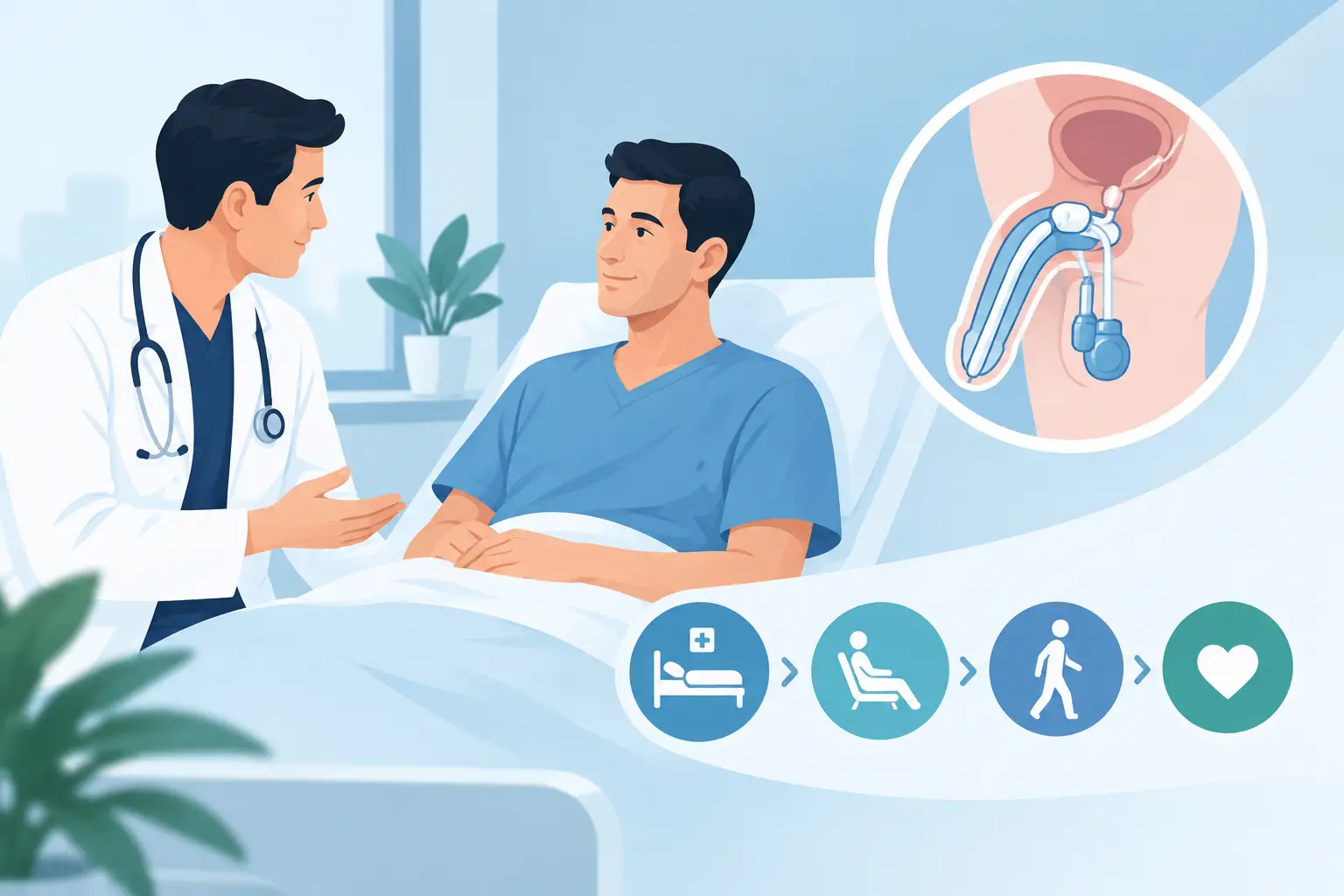
With inflatable penile prostheses, use of the pump does not start immediately after surgery. After waiting for the surgical area to heal and for pain and swelling to subside, how to inflate and deflate the prosthesis is shown in detail at a follow-up examination. This training is a critical part of the treatment.
In most patients, activation is planned for a few weeks later; however, the exact timing is determined individually. Some patients may be advised to do regular inflation-deflation exercises to maintain tissue flexibility and make it easier to get used to the prosthesis. The frequency and duration of this practice must follow the plan given by the surgeon.
With malleable prostheses, pump training is not needed; however, how to position the penis appropriately in daily life and how to bring it into the correct position before intercourse is explained. Whichever type of prosthesis is used, a feeling of unfamiliarity during the first uses is normal. Over time, the patient and their partner adapt more comfortably to how the prosthesis works.
How long should you wait before returning to sexual intercourse?
For sexual intercourse, it is generally expected that wound healing is complete, pain has decreased significantly and suitability has been assessed at a follow-up examination. This period is often around 4-6 weeks, but it is not a fixed schedule for everyone. The period may be longer, especially if there was an additional reconstructive procedure, a penile curvature correction procedure, or a condition affecting wound healing.
During the first episodes of intercourse, it is necessary not to rush, not to continue despite pain, and to use the prosthesis as taught by the physician. A penile prosthesis provides rigidity, but it does not directly change sexual desire, orgasm or the ability to ejaculate. These areas can be affected by many factors, such as age, diabetes, neurological diseases, prostate surgery and medications used.
Involving the partner in the process makes adjustment easier for most couples. Open communication before and after the operation, discussing expectations realistically and, if necessary, informing the couple together contribute to treatment satisfaction.
Which symptoms require seeing a doctor without waiting?
A fever of 38 degrees Celsius or higher, chills, steadily increasing pain, rapidly growing swelling, heavy bleeding, foul-smelling discharge, opening of the wound or marked difficulty urinating should be evaluated without waiting. In patients with an inflatable prosthesis, unusual pain when using the pump, a noticeable change in how the device works or a sudden deformity also require a check-up.
Although not every symptom indicates a serious problem, early communication ensures a safe approach in penile implant surgery. General advice on the internet does not replace a person's own surgical plan. In particular, decisions about antibiotic use, dressing changes or early activation of the prosthesis should not be made on one's own.
Why is follow-up important for long-term comfort?
Penile prostheses are devices that can provide high patient satisfaction; however, a lasting result is supported by regular follow-up and correct usage habits. At follow-up visits, wound healing, the position of the prosthesis, pump use and the process of returning to sexual life are evaluated together. A follow-up approach that respects the patient's privacy and answers their questions openly provides reassurance during this period.
In the andrology practice of Assoc. Prof. Dr. Uygar Miçooğulları, penile prosthesis treatment is planned by taking into account the patient's medical history, expectations and living conditions. In the postoperative period, accessible communication and individualized follow-up are also among the fundamental parts of a safe recovery.
The goal of the recovery process is not just to return to sexual intercourse on a specific date. A process in which you can move without pain, complete wound care safely and learn to use the prosthesis correctly forms the basis for a more comfortable and satisfying result in the long term.