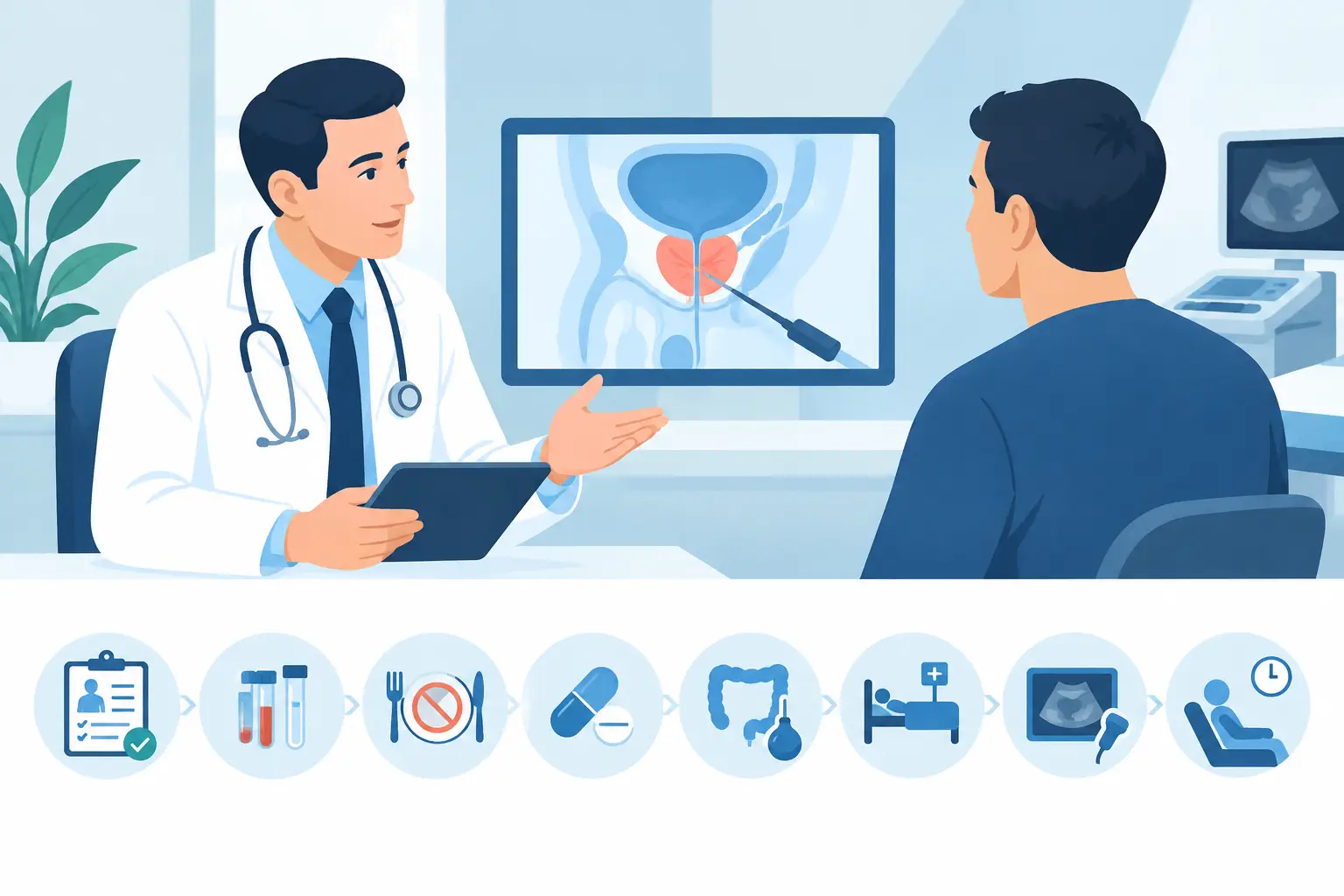

The period after penile curvature surgery is a recovery process that calls for careful follow-up just as much as the technical success of the operation itself. The questions patients ask most often are how long the pain will last, when the swelling will go down, whether erections can cause harm and when they can return to sexual activity. There is no single answer to these questions, because recovery time depends on the degree of curvature, the surgical technique used, any accompanying erectile dysfunction and the person's general health.
In penile curvature caused by Peyronie's disease, surgical treatment is usually considered once the curvature has stabilized and makes intercourse difficult. The aim is not simply for the penis to look straighter. The real goal is a safe return to a pain-free, functional sex life.
Findings considered normal in the first days
In the first days after surgery, swelling, mild bruising, a feeling of tightness and tenderness around the wound may be seen in the penis and surrounding tissues. Because of edema in particular, the penis may look shorter or thicker than it really is. In most patients this appearance is temporary and fades as the tissues heal.
Some pain can be expected within the first 24-72 hours, although its severity may vary with the technique used. Taking the pain relief prescribed by your doctor regularly, resting and choosing underwear that does not press directly on the area can improve comfort. Supporting the penis in an upward position as much as possible may help reduce swelling.
The instructions you are given about dressings, showering and wound care should be followed. Not every surgical incision has the same care needs. Even when self-dissolving stitches have been used, checking the wound line and assessing it for infection should not be neglected.
Should night-time erections be a cause for concern?
Involuntary night-time erections may occur after surgery. This is usually a natural physiological response of the body and does not by itself mean the operation has failed. However, if there is marked, uncontrollable pain during an erection, bleeding from the wound line, a sudden feeling of the wound opening or rapidly increasing swelling, your doctor should be informed.
In some patients, temporary medication adjustments may be made to reduce erections or improve comfort at night. Such medications should be planned according to the individual's medical history. People with cardiovascular disease, those on blood pressure treatment or those taking regular medication in particular should not add medication on their own.
The recovery process after penile curvature surgery
The first week is when wound healing begins but the tissues are still sensitive. Some patients may be able to return to desk work within a short time. By contrast, jobs that involve standing for long periods, heavy lifting, cycling or intense physical effort may require a longer rest.
In the second and third weeks, bruising and edema usually decrease. Even so, it is too early to assume that the penis has taken on its final appearance. Firmness in the surgical area, being able to feel the suture material or a sense of irregularity in the tissues may be noticed in the early period. Follow-up examinations are important for distinguishing normal healing findings from situations that require intervention.
Full tissue healing progresses over weeks. Particularly after more extensive reconstructive surgery such as plaque incision and grafting, the process may take longer than after simple plication techniques. For this reason, another patient's recovery time should not be taken as a direct benchmark for you.
How does the technique used affect recovery?
Techniques that may be used in penile curvature surgery include plication or shortening procedures, plaque incision or excision with grafting and, in suitable patients, penile prosthesis surgery. The choice of method is determined by the direction and degree of the curvature, penile length, the type of deformity and erectile function.
Recovery after plication surgery may often be quicker. However, because this method may involve shortening the opposite side to correct the curvature, the risk of some loss of penile length should be discussed openly before surgery. Graft procedures may offer an advantage in preserving penile length in more complex deformities; on the other hand, the risk of an effect on erection quality and the follow-up needs are different.
In patients with accompanying erectile dysfunction, a penile prosthesis may be an option that addresses both erectile function and the curvature. Expected success, possible risks and alternatives should be discussed individually for each method. Transparent planning is one of the key elements of satisfaction after surgery.
When can sexual intercourse be resumed?
Sexual intercourse, masturbation and activities that could injure the penis should be avoided for the period specified by your doctor. In many patients this period is around 4-6 weeks; however, graft procedures, prosthesis surgery, delayed wound healing or an additional medical condition may change it.
Attempting intercourse too early can lead to pain, bleeding, strain on the suture line and increased psychological anxiety. Once the waiting period is over, it is natural to feel mild tenderness or a need to be cautious during the first experiences. If there is pain, strong concern that the curvature persists or difficulty achieving an adequate erection, these should be discussed at the follow-up appointment rather than kept hidden.
Although the surgery aims to correct penile curvature, sexual well-being is not limited to anatomical correction. The patient's expectations, communication with their partner, erection quality and performance anxiety remaining from before surgery also affect the outcome. When needed, medical treatment or sexual counseling can provide support that complements surgical treatment.
Which symptoms require seeing a doctor without delay?
Not every pain or swelling means a complication. However, some findings should be assessed without delay. High fever, increasing redness and warmth, foul-smelling discharge, bleeding that does not stop, opening of the wound line, inability to urinate, sudden marked swelling or severe pain that cannot be controlled despite medication should be reported to your doctor.
In addition, early assessment is helpful if, after surgery, you notice a rapidly increasing curvature that differs from the previous state or an unexpected change in erectile function. Rather than downplaying the problem and postponing the check-up, contacting the surgical team directly is the safer approach.
Why are follow-up visits part of the treatment?
Post-operative follow-up is not only for checking the stitches. Wound healing, signs of infection, pain level, the appearance of the penis, erectile function and the plan for returning to sexual activity are all addressed together in these visits. When necessary, medication or lifestyle adjustments can be re-planned.
In the approach of Assoc. Prof. Dr. Uygar Miçooğulları, penile curvature treatment is not limited to the surgical procedure; detailed information and accessible post-operative follow-up are core elements of the process. A successful outcome is shaped not only on the day of surgery but by the right guidance at every stage of recovery.
Give yourself time during recovery, do not match experiences you read online one-to-one with your own situation, and share any change that concerns you with your follow-up team. Regular follow-up carried out with privacy is one of the strongest supports for returning to your sexual health with confidence.